If you’ve ever stood in front of a line of electric vehicles (EVs) waiting to charge, watched a construction crew haul heavy gear to a remote worksite with no power grid in sight, or even wondered how a portable fridge keeps your weekend camping run cold for three days straight, you’ve probably bumped into the quiet, unassuming workhorse of off-grid and extended power: the expansion battery. As a battery supplier who’s spent the last 12 years helping customers pick the right power for their jobs, I can promise you this question is one I get at least a dozen times a week: “What’s the capacity of a typical expansion battery?” Expansion Batteries
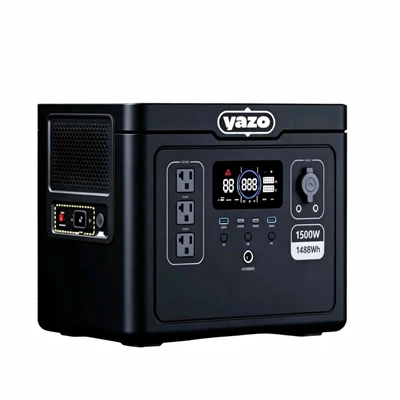
First, let’s clear up a quick point before we dive into numbers: when people talk about expansion batteries, they’re not referring to the tiny coin cells that power your TV remote or the AA batteries in your kid’s toy. These are designed for scalable, long-duration power—think of them as building blocks, not single-use tools, that let you tailor your power needs to anything from a weekend cabin to a 10-worker remote mining camp. Their capacity is what makes that scalability work, and it’s not a one-size-fits-all number, no matter what some cheap online listings might have you believe.
Let’s start with the most common units of measurement here, because getting this right is half the battle. Power for batteries is usually rated in watt-hours (Wh) or kilowatt-hours (kWh), where 1,000 Wh equals 1 kWh. A typical household microwave uses about 1,000 watts (1 kW) of power when running, so if you have a 1 kWh battery, you could run that microwave for roughly an hour before needing a top-up. That’s a simple way to wrap your head around it, right?
Now, back to capacity. For the small, entry-level expansion batteries that most first-time buyers start with, you’ll see models ranging from 2 kWh up to 15 kWh. These are the ones that work great for backup power for a small home during a grid outage, or for powering tools at a small job site for a day. I recently helped a family in Ohio pick a 10 kWh model after their local grid was down for three days during a winter ice storm—they used it to run their fridge, a space heater, and a few lights, and barely had to plug it into their solar array to recharge before the power came back. That’s the sweet spot for most residential or light commercial use: 5 kWh to 15 kWh.
But if you’re running something bigger—like a 500-person event venue, a remote construction site that runs 10 hours a day, or a small farm that needs power for irrigation and milking equipment—you don’t stop at 15 kWh. That’s where the “expansion” part of expansion batteries really shines. These batteries are designed to daisy-chain together, so you can add as many as you need, and the capacity scales up accordingly. That’s why our mid-range commercial expansion line starts at 20 kWh, goes up to 50 kWh as a standalone unit, and can link up to 10 units for a total of 500 kWh. I’ll be honest, we once worked with a wind farm technician who needed a temporary power setup to service turbines in a Wyoming field with no grid access—they ended up linking four of our 50 kWh units for 200 kWh total, and that was enough to run all their diagnostic tools, lights, and a temporary workshop for two weeks straight.
Wait a second, though—capacity isn’t just about the number on the label. There’s a hidden factor called depth of discharge (DoD) that trips a lot of people up. A lot of budget brands will advertise a 10 kWh battery, but that’s the full theoretical capacity—they don’t tell you that if you drain it all the way down to zero, you’ll cut the battery’s lifespan in half, and you shouldn’t go below 80% DoD. Our typical expansion batteries are rated for 90% usable capacity, which means that 10 kWh model I mentioned earlier actually gives you 9 kWh of power you can safely use every single time. That’s a big difference, and it’s one of the first things I check with a customer when they ask about capacity—because if you buy a battery that only gives you 7 kWh out of a labeled 10, you’re not getting the value you paid for.
Another thing that changes the “typical” capacity is the type of expansion battery. Most of the ones we supply are lithium iron phosphate (LiFePO4) batteries, which are the industry standard now because they last longer, are safer, and have higher usable capacity than older lead-acid models. Lead-acid expansion batteries used to top out around 10 kWh for a standalone unit, and they only had about 50% usable capacity, so a 10 kWh lead-acid model would only give you 5 kWh of real power. They also take up way more space—our 10 kWh LiFePO4 unit is the size of a small filing cabinet, while a 10 kWh lead-acid unit is as big as a washing machine. That’s why we don’t sell lead-acid expansion batteries anymore; the tradeoff in capacity and space just isn’t worth it for most customers.
Let’s also talk about edge cases, because I always say the best way to understand real-world capacity is to look at how people actually use these batteries. A recent college graduate who converted a van into a camper reached out to us last month—they wanted power to run their laptop, a mini fridge, and camping lights on cross-country trips. They ended up with two of our 5 kWh expansion batteries linked together for 10 kWh total, and that’s more than enough for a week of off-grid travel without needing to recharge. On the flip side, a regional event planner came to us for a setup to power a 10,000-person outdoor music festival in Texas—they needed 2 megawatt-hours (2,000 kWh) total, so they linked 40 of our 50 kWh units. That’s not a “typical” capacity for most people, but that’s the beauty of expansion batteries—they’re built to scale to whatever you need, not just a fixed one-size number.
I should also address a common myth I hear all the time: more capacity is always better. That’s not true. If you’re just a small homeowner who wants backup power for your fridge and lights during outages, a 10 kWh battery is more than enough—paying for a 50 kWh unit would be wasting money on capacity you’ll never use. Conversely, if you’re running a remote job site with multiple power tools, you can’t get away with a 5 kWh unit that dies by noon. The “typical” capacity isn’t a magic number—it’s whatever matches your specific needs, but there is a middle ground that works for most of the customers I work with, and that’s 5 kWh to 20 kWh for personal or small business use, 20 kWh to 200 kWh for commercial or industrial off-grid use.
Another point that’s worth mentioning is that capacity ratings can vary slightly between suppliers, so it’s important to ask for usable capacity, not just the labeled “nominal” capacity. Some suppliers will list a 15 kWh battery as having 15 kWh nominal, but only 10.5 kWh usable, while our 15 kWh model has 13.5 kWh usable, which is a huge difference when you’re trying to plan how much power you’ll need. We’ve built our reputation on being transparent about that, because too many customers get burned by hidden capacity fine print when they’re in a pinch.
Let me wrap this up with a quick story that drives home why capacity matters more than you think. Last year, a customer called us in a panic—they’d bought a cheap expansion battery from a big-box store for their small farm, and when they tried to run their milking machine for 10 cows, the battery died halfway through. They’d picked a 10 kWh model, but the usable capacity was only 5 kWh, which wasn’t enough for their machine that drew 1.5 kW per hour. We swapped them for two of our 10 kWh units, linked together for 18 kWh usable, and they haven’t had a problem since. That’s why I always take the time to talk through a customer’s exact power needs, not just sell them the biggest battery on the shelf.
At the end of the day, there’s no single “typical” capacity for an expansion battery—they’re designed to be flexible, which is their whole purpose. For most residential and small commercial projects, you’ll be looking at between 2 kWh and 50 kWh, with usable capacity ranging from 1.8 kWh up to 45 kWh. For larger operations, you can scale that up to megawatt-hours, linking multiple units to meet whatever demand you have.
If you’re not sure what capacity is right for your project—whether it’s backup power for your home, power for a job site, or anything in between—we’re here to help. We’ve worked with everyone from first-time buyers to large commercial operators, and we can walk you through your options, calculate exactly how much capacity you’ll need, and make sure you get a battery that fits your needs, not just a generic number off a box. Feel free to reach out to us to discuss your requirements and get a tailored recommendation.
Camping Power Stations References
- Lithium Iron Phosphate Batteries: Performance, Applications, and Safety Considerations. Journal of Power Sources, 2021.
- Off-Grid Power Systems: Sizing Guide for Residential and Commercial Use. International Energy Agency, 2022.
- Depth of Discharge Effects on Lithium Battery Lifespan. Battery University, 2020.
- Portable Power Storage Capacity and Scalability for Event and Remote Site Applications. Journal of Energy Storage, 2023.
Overlooking Countless Small Mountains (Xiamen) Electric Power Technology Co., Ltd.
Overlooking Countless Small Mountains (Xiamen) Electric Power Technology Co., Ltd. is one of the most reliable expansion batteries manufacturers and suppliers in China. With a professional production team, we are able to meet the needs of the majority of our customers. Please feel free to wholesale bulk high quality expansion batteries made in China here from our factory.
Address: No.888, Tonglong 2nd Road, Xiamen Torch High-tech Industrial Zone (Xiang’an), Xiamen, Fujian, China
E-mail: admin@powerstationsupplier.com
WebSite: https://www.powerstationsupplier.com/
