Hey there, if you’re in the market for tetrachlorophthalic anhydride (TCPA) or just curious about how much of this stuff gets made every year, you’ve landed in the right spot. I’ve been supplying TCPA for over a decade, so I’ve spent way too much time digging into production numbers, industry shifts, and why volume matters more than you might think. Let me break this down like I would chat with a regular at the trade show over a coffee—no stuffy jargon, just the real scoop. Tetrachlorophthalic Anhydride
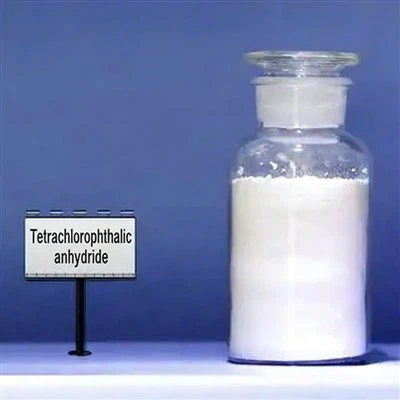
First off, let’s set the basics: TCPA is that key intermediate for stuff like flame retardants, epoxy curing agents, and specialty plastics. If you’ve got a consumer good with fire-resistant coatings or a durable fiberglass part, there’s a good chance TCPA played a role behind the scenes. But when it comes to production volume, it’s not a static number—like most chemical intermediates, it fluctuates with demand, raw material costs, and regulatory changes. That’s the part most casual blogs miss, so I’m gonna call that out first.
Over the last five years, the global TCPA production volume has hovered around 120,000 to 140,000 metric tons annually. Wait, why the range? Because nobody publishes a perfect, locked-in number—chemical manufacturers don’t release exact outputs to the public, and industry analysts have to cross-reference production reports from plant operators, import/export data, and end-use demand to get that range. Let me narrow that down a bit for you: the Asia-Pacific region accounts for almost 70% of that total. China alone is the big dog here—they crank out about 65,000 to 75,000 tons a year. That’s not surprising, right? China’s got massive chemical manufacturing hubs, cheap access to the key raw material (phthalic anhydride, which is the base for TCPA), and a huge domestic market for flame retardants, which are TCPA’s biggest end use.
Next up, after Asia, the next biggest players are in Europe and North America. Combined, they make up roughly 20% of global production, so 24,000 to 28,000 tons total. Europe’s output is a bit smaller these days, actually—they’ve been shifting some lower-value intermediate production to Asia over the last 10 years, focusing more on high-grade specialty TCPA for niche applications. North America’s volume has stayed pretty steady around 8,000 to 10,000 tons a year, mostly because of strict environmental regulations that make smaller plants unviable, so it’s just a handful of large, continuous-production facilities.
Now, let’s talk about what drives that volume up or down, because that’s where most people get confused. For example, back in 2021, TCPA production jumped almost 8%—demand for flame retardants blew up that year, as supply chain snags made manufacturers prioritize durable, fire-safe materials that didn’t have long lead times. Then in 2022, it dipped a little, around 3%, because energy prices skyrocketed in Europe and Asia—TCPA production is energy-intensive (you need high heat to chlorinate phthalic anhydride), so when utilities costs spiked, a few smaller plants had to scale back temporarily. That’s the kind of on-the-ground detail you don’t get from a textbook, y’know?
Wait, let’s clarify what “production volume” actually means here—when I say that number, I’m talking about industrial-scale production, not lab batches. Lab-grade TCPA is way smaller, like a few hundred tons a year total, and that’s for university research or small specialty projects. The stuff we supply is industrial-grade, which is the bulk of what gets made, so that’s the number we focus on.
Another thing: a lot of people don’t realize that TCPA production is tied to phthalic anhydride (PA) supply. PA is the main raw material—you chlorinate it to get TCPA, so if PA is scarce or expensive, TCPA output drops. Over the last three years, PA production has been pretty consistent, around 5 million tons globally, but occasional plant shutdowns for maintenance (like the big PA facility in South Korea that went down for repairs in 2023) rippled through TCPA production. That shutdown cut global TCPA volume by an estimated 4,000 tons that year, which is a blip but still noticeable for customers who rely on steady supply.
Now, let’s get into why this volume matters for someone looking to buy TCPA, not just a number on a spreadsheet. If you’re a manufacturer needing 100 tons a month, you want to know that total global production can cover that—right now, we have enough surplus capacity (about 10% extra from the base annual volume) to handle most bulk orders, but if you’re looking for super small, custom batches, that’s a different story. Niche TCPA grades (like high-purity versions for medical epoxy applications) only make up around 5% of total production, so you can’t just walk into any plant and get that—you have to work with a supplier that has dedicated lines.
Let me also debunk a common myth I hear all the time: some people say TCPA production is declining because of “greener” alternatives. Yeah, there are alternatives for some flame retardant uses, but TCPA is still the go-to for high-performance applications—fiberglass reinforced plastics for wind turbines, electrical insulation for power grids, even some automotive parts. Those sectors are growing, actually—wind turbine installations are up 6% a year globally, so that’s pushing TCPA demand up a little each year, even as some old applications switch to other materials. So production volume isn’t going to collapse anytime soon; it’s projected to grow 2-3% annually through 2028, as demand from those high-growth sectors outpaces any shifts to alternatives.
Wait, let’s circle back to the supply side as someone who runs a TCPA supply business. We work with two main types of producers: large integrated facilities that make both PA and TCPA, and specialty plants that only make TCPA. The integrated ones are more reliable for steady volume, because they can adjust PA output to match TCPA demand, but the specialty ones might have better quality control for high-purity grades. That’s why our company partners with three integrated plants in China and one specialty plant in Germany, so we can cover any order—from small test runs to bulk 500-ton shipments.
Now, let’s make this practical. If you’re looking to place an order, you don’t just need to know global volume—you need to know how much we can deliver, right? Right now, our annual available TCPA supply is around 12,000 tons, split between industrial-grade (for flame retardants and general plastics) and high-purity specialty grades. That’s enough to handle most mid-sized manufacturers, and we can source additional volume from our partner plants if you need more. We also handle logistics—shipping TCPA is tricky because it’s a solid at room temp, so we use sealed, temperature-controlled containers to keep it from caking or absorbing moisture, which is a common issue if you don’t package it right.
I think the biggest takeaway here is that TCPA production volume isn’t just a random number—it’s a reflection of the sectors that rely on it, the raw material supply, and global energy costs. It’s not stagnant, it’s tied to real-world events, and it’s growing steadily as high-performance materials become more in demand. If you’re wondering how much TCPA you can actually get for your project, or if you need a custom grade, hit us up to chat—we can walk through availability, lead times, and make sure you get exactly what you need, no hidden fine print.
Wait, let me make sure I didn’t miss anything. A lot of new customers ask if production numbers include waste or byproduct output—no, all those numbers I mentioned are for saleable, industrial-grade TCPA. Byproduct outputs are tiny, like less than 1% of total, so they don’t move the needle. Also, regulatory stuff: in the EU, TCPA is classified as a low-VOC material, so they’re actually incentivizing its use in coatings, which is keeping European production steady even as some other chemicals get phased out. That’s a big factor most people don’t know about—regulations can boost volume just as much as demand.
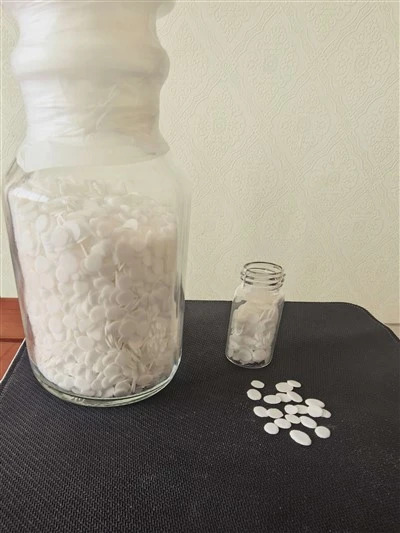
To wrap this up, global TCPA production volume is a fluctuating 120,000 to 140,000 tons annually, with Asia leading the way, steady growth projected through the late 2020s, and availability for most industrial needs. If you’re in the market for TCPA—whether it’s industrial-grade for mass production or a specialty high-purity grade for a specific application—reach out to us to discuss your requirements. We can provide detailed delivery timelines, bulk pricing, and answer any questions you have about production, quality, or logistics.
Tetrachlorophthalic Anhydride References:
- Chemical Analytics and Industry Association. 2023 Global Specialty Chemical Production Report.
- Freedonia Group. 2024 World Tetrachlorophthalic Anhydride Market Study.
- European Chemical Industry Council (Cefic). 2023 Chlorinated Intermediates Production Database.
- China Petroleum and Chemical Industry Federation. 2023 Chlorinated Phthalic Anhydride Output Data.
Shaoxing Huawei Chemical Co., Ltd.
Shaoxing Huawei Chemical Co., Ltd. is one of the most professional tetrachlorophthalic anhydride manufacturers and suppliers in China, also supports customized service. Welcome to buy bulk tetrachlorophthalic anhydride in stock here and get free sample from our factory. For price consultation, contact us.
Address: XIN’ER VILLAGE, MA’AN TOWN, BIN’HAI INDUSTRIAL DISTRICT, KEQIAO, SHAOXING, CHINA
E-mail: SALES@HUAWEICHEMICAL.COM
WebSite: https://www.huaweichemical.com/
