If you’ve ever used a laser level to hang shelves straight, aligned a CNC machine’s cut path, or even played with a laser pointer to point out a slide, you’ve probably interacted with a laser module at some point. But if you’re in the market for one, you’ve likely run into two main types: dot laser modules and line laser modules. As someone who’s been supplying dot laser modules for years, I can’t tell you how many times I’ve gotten questions from folks mixing these two up. It makes total sense—both are laser-based, both project a clear beam, but their actual uses and how they work are way different. Let’s break this down, no boring tech jargon, just the real deal. Dot Laser Modules
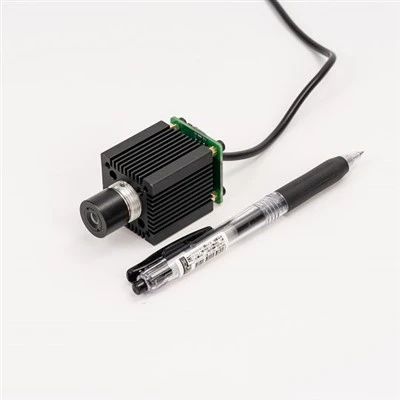
First, let’s start with the basics of how both are made, because that’s where the difference starts. A laser module is basically a tiny laser diode packaged with optics (that’s the lenses or mirrors, for the tech folks) to shape the beam. For a dot laser module, the optic is a small, precisely aligned lens that focuses the laser beam into a tight, pinpoint dot—think the red dot on a dog’s toy, or the tiny green dot you see on a wall from a pointer. That’s it, super simple in terms of output: one single, defined point.
A line laser module? Its optic is totally different. Instead of a tiny focus lens, it uses a line lens—usually a cylindrical lens or a diffractive optical element (DOE) that spreads the single laser beam out into a straight, thin line. Some even make multiple lines, but the core is a straight projection instead of a dot. If you’ve ever used a laser level that casts a horizontal or vertical line on a wall, that’s the line module in action. Easy enough, right? But the confusion comes when people mix up their uses, so let’s go through when you’d actually pick one over the other.
Let’s start with dot laser modules, which is my lane, so I know these inside and out. I supply dot modules for all kinds of industries, and each use case relies on that single pinpoint dot. For example, in manufacturing, when a factory worker is assembling tiny parts—like fitting a watch hand onto a watch face, or aligning a circuit board component—they need that one exact spot to line up with. A line would be too wide, too vague; a dot is precise enough to get that 0.1mm alignment right every time. Then there’s the whole scanning and measurement side. Think barcode scanners: the old-fashioned handheld ones use a dot laser to scan the barcode, bouncing off the lines to read the numbers. Or lidar? Wait, no, small-scale dot modules are used in things like phone cameras for autofocus—some phones use a dot projector (that’s a dot laser module) to create hundreds of tiny dots on your face for Face ID, mapping your features super accurately. Oh, and even gaming: laser tag uses dot modules to track where the gun is pointing, because a line would be too hard to pinpoint which exact position is a hit.
Wait, another big use for dot modules: alignment in construction for smaller projects. If you’re laying tile in a small bathroom, you might use a dot to mark where each tile goes—single spot, easy to line up grout lines. But you wouldn’t use a line there, because the line is for long stretches, not tiny individual tiles. Also, dot modules are usually more compact sometimes? Wait, no, not always, but their power is often lower for precision uses—most of the dot modules I supply are 1mW to 5mW, which is safe for indoor use, no eye damage if you’re not staring directly at the beam.
Now line laser modules. Their whole thing is covering a wide area with a straight line, so their uses are totally different. Construction is the big one here: laser levels, as I mentioned, project a horizontal and vertical line to make sure walls are plumb, floors are level, cabinets are hung straight. If you’re building a deck, you use a line laser to mark where the joists go, because you need a straight line across the whole length of the deck, not a single dot. Then there’s surveying: land surveyors use line lasers to mark property lines or grade slopes, so they can see the contour of the land at a glance. Manufacturing also uses line modules, but for things like cutting material—if you’re cutting fabric for clothing, a line laser projects a straight line on the fabric so the worker knows where to cut, instead of marking each spot with a dot. Or in metal fabrication, marking a straight weld line along a sheet of steel—way faster than marking every dot.
Wait, but let’s talk about the limits of each, because that’s where people mess up. A dot module can’t cover a wide area—if you need a line, one dot won’t help. Conversely, a line module can’t give you the pinpoint accuracy you need for small parts. For example, if you tried to use a line laser for a watch assembly, the line is like 1mm thick at close range, which is way too wide to fit a 0.5mm watch hand onto a dial. The dot is 0.1mm or smaller, perfect. On the flip side, if you’re hanging a full-length mirror, a dot laser would make you mark 10 different dots along the wall to get the straight edge, whereas a line laser just gives you that entire straight line in one go—way faster.
Another difference people don’t talk about: beam stability. Because dot modules are focused on a single point, their optics are precision-machined to stay aligned, so the dot doesn’t waver. Line modules, since they’re spreading the beam, can be a bit more prone to line distortion if the optic isn’t high quality—like if you get a cheap line module, the line might curve or have kinks at long distances. That’s why when I supply dot modules, I always tell my customers to check the optic tolerance, because a bad lens can make the dot fuzzy, which ruins the accuracy.
Power levels are also a thing, though they overlap a bit. Dot modules for consumer use are usually low power (1-5mW) for safety, but industrial dot modules can go up to 50mW for things like marking materials that absorb laser, like wood or plastic. Line modules are similar: consumer laser levels are 1-10mW, but industrial ones can be higher for outdoor use, where the line is harder to see. But even a high-power line module can’t replace a dot for pinpoint work—spreading the beam inherently reduces the intensity of the dot at any point along the line, so you can’t get that tiny, bright single spot.
Wait, let’s use a relatable example to make this real. Suppose you’re setting up a home gym and need to mark where to mount a TV above your fireplace. If you use a dot laser, you’d have to move it along the wall, marking dots every few inches until you have a straight line—tedious, easy to mess up. If you use a line laser, you just turn it on, and the line is there immediately, so you can hang the TV in one spot that hits the line. Now, if you’re mounting a small security camera on that same wall, right above the outlet, you need a dot laser to line up the camera’s mounting holes exactly with the outlet screw— the line would be too wide, so you can’t get that precise spot. That’s the difference in action: same project, two different tools for two different steps.
I also get a lot of questions from people who think “higher power means better laser,” but that’s not true. For a dot module, you want consistent power at a single point—too high, and it’s a fire hazard for small parts; too low, and it’s hard to see in bright rooms. For line modules, you want even power along the whole line, not a bright dot in the middle that fades at the edges. So they’re optimized for totally different beam profiles, which is why you can’t just repurpose one for the other.
Another key point: distance performance. Dot modules hold their point really well over long distances, because it’s a single focused spot. A line module, on the other hand, gets thinner or fuzzier the farther it is from the source, because the line spreads out as it travels. For example, a dot laser might project a clear dot 100 feet away, but a line laser might be too faint or broken up at that distance to use for surveying. Conversely, a line laser will cover a 50-foot wall with a straight line, which a dot would have to be moved across, taking five minutes instead of two seconds.
Let’s clear up a common myth too: some people think line lasers are just “dots spread out,” which is technically true, but the optic isn’t just a lens that makes the beam bigger. It’s a specialized optic shaped to create a straight, uniform line, not a wobbly, diffused spread. Cheap line modules might just use a plain lens that widens the beam, leading to a fuzzy line, but good ones (like the line modules we use for comparison, though our main focus is dots) use DOE lenses that split the beam into a perfectly straight, narrow line with even intensity. That’s why you can trust a good line laser for level work—it’s not just a wide dot, it’s a purpose-built line.
Now, why does this matter when you’re ordering? Let’s say you’re a small business owner doing custom furniture, and you need to mark where to drill pilot holes for drawer pulls. If you order a line module, you’ll waste time because the line is too wide to line up the small screw holes. If you’re a contractor framing a house, and you order 10 dot modules to mark every stud, you’ll spend twice as much time as you would with one line laser. That’s the practical side of the difference—picking the right one saves you time, money, and headaches.
As a dot laser module supplier, I always stress to my customers: ask yourself, “do I need to point to one exact spot, or cover a long straight area?” If it’s the first, dot is the way to go; the second, line. But I also tell folks not to assume size matters. A dot module can be tiny (like 5mm in diameter) for small electronics, or larger for industrial uses, while a line module can be compact for a handheld laser level or big for a construction mount. Size depends on the application, not the type.
Wait, let’s talk about edge cases where people cross over. For example, some line lasers can project multiple dots along the line, so you get the best of both, but that’s a special, more expensive module. They’re designed to mark both the straight line and reference points, but they’re not standard. Or some dot modules can be modified to project a line, but that requires swapping the optic, which defeats the purpose—you might as well just buy a line module.
Another thing: eye safety. Both are class 2 lasers for consumer use, which means they’re safe if you don’t stare at them directly for long periods, but since dot modules are often used at close range for small parts, you might get closer to the beam, so we make sure our dot modules meet all safety standards. Line modules are often used at longer distances, so their power is similar, but the line is wider, so there’s less risk of eye damage from a quick glance—though still, don’t stare.
I’ve seen too many people make the mistake of ordering the wrong module. Last year, a customer reached out because they tried to use a line laser to align tiny lenses for a camera, and it wasn’t precise enough—they ended up wasting $200 on parts. When I explained they needed a dot module, they ordered a few from me, and saved a ton of time and money. That’s why it’s my job to not just sell dot modules, but help people pick the right one for their needs, because I know how frustrating it is to have the wrong tool for the job.
So to wrap this up, let’s make the difference clear, no fine print: dot laser modules project a single, pinpoint spot, built for precision, small-scale, exact positioning. Line laser modules project a straight, uniform line, built for long-range, wide-area alignment. They work on the same laser basic, but their optics are totally different, which makes their use cases night and day.
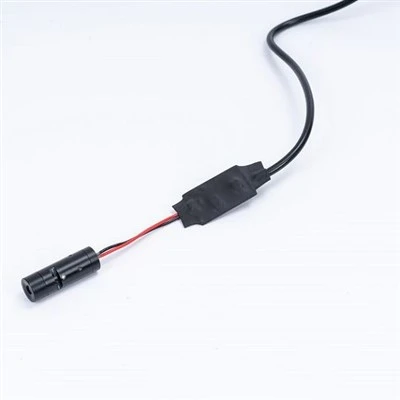
If you’re in the market for a dot laser module—whether it’s for electronics assembly, barcode scanning, Face ID tech, or any other use where you need that perfect pinpoint—feel free to reach out to us to talk through your needs. We’ve got a range of dot modules, from small consumer ones to industrial-grade, and we can help you pick the right one for your project, no guesswork needed.
Fiber Coupled Laser Modules References
- International Electrotechnical Commission. (2019). IEC 60825-1: Safety of laser products – Part 1: Equipment classification and requirements.
- Laser Focus World. (2022). “Optics for Laser Modules: Choosing Between Dot and Line Outputs for Precision Applications.”
- U.S. Food and Drug Administration. (2021). “Laser Product Safety: Classifications and Applications for Consumer and Industrial Lasers.”
Changshu Desheng Optics Electronics Co., Ltd.
As one of the most professional dot laser modules manufacturers and suppliers in China, our products have good reputation in the market. Please feel free to buy advanced dot laser modules for sale here from our factory. Good service and quality products are available.
Address: 8A, Yineng science and technology industrial park, No.183, Yinhe Road, Southeast Development Zone, Changshu, Jiangsu Province, China.
E-mail: desheng1@dershinelaser.com
WebSite: https://www.ds-lasers.com/
