If you’ve ever stood near a gas-fired power plant on a hot summer day, or watched a refinery’s processing unit hum steadily through a heatwave, you’ve probably felt the force of a large, spinning fan pushing air past rows of metal tubes. That’s not just a random breeze—it’s the work of an induced draft air cooled heat exchanger (ID ACE), a workhorse of industrial thermal management that keeps systems safe, efficient, and operational when cooling water is scarce or cost-prohibitive. As someone who’s spent the last decade sourcing, designing, and supplying ACE units for everything from petrochemical plants to natural gas processing facilities, I’ve seen first-hand how ID ACEs solve problems that other cooling systems can’t, and why they’re often the unsung heroes of heavy industry. Air Cooled Heat Exchangers
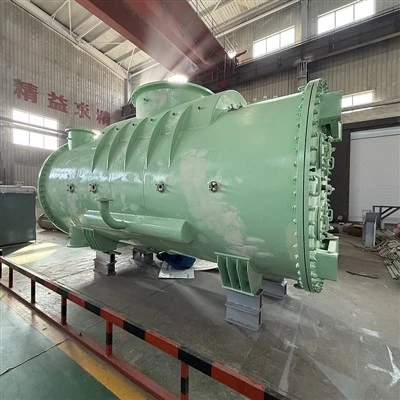
Let’s start with the basics: what makes an air cooled heat exchanger different from its water-cooled cousins? Water cooling relies on circulating cold water to absorb heat from process fluid, then piping that warm water to a cooling tower to reject heat to the air. While effective, it carries major downsides: water rights costs, treatment expenses for scaling and corrosion, and environmental risks from accidental leaks. Air cooled heat exchangers skip the water entirely, using ambient air as the primary cooling medium. That cuts water use by up to 95% for many applications, which is why ID ACEs are now the go-to choice for industrial sites in arid regions, regions facing water restrictions, or operations looking to slash overhead on water infrastructure.
Now, within the ACE universe, there are two core configurations: induced draft and forced draft. The difference hinges on where the fan sits—and that’s a detail that shapes every part of how the unit works. In a forced draft ACE, the fan is located at the air intake side of the unit, pulling ambient air into the heat exchanger tubes. In an induced draft ACE, the fan is mounted at the exhaust side, pulling air through the tube bundle and pushing it upward or away from the unit. This seemingly small swap in fan placement creates a host of operational and performance differences that make ID ACE the right pick for many industrial tasks.
Why choose induced draft over forced draft? Let’s break down the science. When the fan is on the exhaust side, it creates a negative pressure zone inside the unit. That means air is drawn uniformly across the entire surface of the tube bundle, even when the fan is large and the tube bundle spans dozens of feet. In forced draft designs, positive pressure at the intake can cause air to short-circuit—meaning warm, already used air leaks into the intake before it can pass through the tubes, reducing cooling efficiency. For plants operating at full capacity year-round, that efficiency gap adds up: an ID ACE can deliver 10-15% more cooling capacity than a similarly sized forced draft unit in the same conditions.
Another key benefit of induced draft: fan placement reduces the risk of contamination. In many industrial sites, the air isn’t clean—think refineries with oil mist, chemical plants with corrosive fumes, or coastal facilities with salt air. The forced draft fan’s intake is exposed to that dirty air, which can damage fan blades, clog filters, or even carry debris into the tube bundle. With an ID ACE, the fan sits on the exhaust side, so it only handles the slightly warmer, cleaner air that’s already passed through the tubes. That protects the fan from corrosive or dirty intake air, cutting maintenance costs and extending the unit’s lifespan by several years.
Thermal performance also holds up better in hot, humid conditions for ID ACEs. On a sweltering day, ambient air is warmer, so cooling becomes less efficient regardless of the system. But because induced draft pulls air through the tubes with consistent negative pressure, it can overcome minor air temperature variations more effectively than forced draft. For power plants that run at peak load during summer months, that extra stability translates to less downtime and more consistent output. I’ve seen forced draft units struggle to keep up on 95°F days, while our ID ACEs maintained 98% of their rated cooling capacity— a difference that can mean thousands of dollars in lost production avoided over a single season.
Of course, no design is perfect. Induced draft ACEs tend to be noisier than forced draft units, because the fan is pushing air at higher velocity as it exhausts. That’s a trade-off that matters for sites near residential areas, but for most industrial locations, that noise is mitigated with sound-dampening enclosures that we incorporate into every unit we supply. Induced draft units also require more structural support, since the fan is pulling rather than pushing, but modern engineering has cut that extra support cost to just a few percentage points of total unit expense—well worth the performance gains for most applications.
So, what do ID ACEs actually cool? They’re versatile, but they shine in specific industrial processes. Let’s start with power generation: natural gas-fired combined cycle plants use ID ACEs to cool exhaust gas recirculation systems, lube oil, and steam condensate, eliminating the need for large cooling towers that would require massive amounts of water. In the petrochemical industry, ID ACEs cool process fluids like ethylene, propylene, and crude oil fractions during distillation and fractionation—steps where even small variations in cooling can ruin product quality or cause safety hazards. We also supply ID ACEs to natural gas processing plants, where they cool raw gas to remove water and hydrocarbons, a critical step in preparing gas for pipeline transport. Even food and beverage facilities use them to cool large batches of product without the risk of water contamination, a huge priority for food safety.
Let’s walk through how an ID ACE works in practice, using a refinery’s crude oil cooling system as an example. The process starts with hot crude oil, which has been heated to over 500°F during distillation. This hot oil is piped directly into the heat exchanger’s tube bundle, a series of tightly finned metal tubes (usually carbon steel for standard applications, or alloy steel for corrosive environments) arranged in a rectangular frame. Below and around the tube bundle, a large, low-speed axial fan is mounted at the top of the unit. When the fan turns, it creates a vacuum that pulls cool ambient air from the ground or lower levels up through the finned tubes. The fins on the tubes dramatically increase the surface area exposed to the air, letting heat transfer quickly from the hot oil inside the tubes to the flowing air. As the air passes through the tubes, it absorbs heat and rises out the top of the unit, carrying the waste heat away. The now-cooled oil exits the heat exchanger and is piped to the next stage of the refinery process, while the fan continues pulling air to repeat the cycle 24/7.
One of the biggest misconceptions I hear from plant managers is that air cooled heat exchangers are less reliable than water-cooled systems. That’s simply not true for properly designed and maintained ID ACEs. Modern units use direct-drive or gear-driven fans with variable speed controls, which adjust fan output based on real-time process temperature. For example, on a mild spring day, the fan can run at 30% speed to save energy, while on a hot summer day, it ramps up to 100% to maintain cooling. We also build every ID ACE with redundant fans—if one fan fails, the other can carry up to 70% of the load, eliminating unplanned downtime. I’ve worked with a Texas refinery that’s run the same set of our ID ACEs for 12 years with only two minor fan bearing replacements, a track record that beats most water-cooled cooling towers in the same region.
Maintenance is a big part of reliability, too, and ID ACEs have lower maintenance requirements than you might think. Because the fan is on the exhaust side, it’s less exposed to dirt and corrosion, so bearing checks are only needed every six months, compared to every three months for a forced draft fan. The tube bundles are also easy to access for cleaning—we design our units with hinged access panels that let teams remove debris or buildup with high-pressure water, no special equipment needed. That ease of maintenance translates to lower long-term costs, a key factor when comparing ACE units to alternative cooling systems.
When we design an ID ACE for a client, we don’t just pick a size and ship it. We start with a detailed assessment of their site conditions: ambient air temperature extremes, the temperature and flow rate of the process fluid, environmental regulations, and even nearby noise limits. For a plant in the Arizona desert, for example, we specify a larger tube bundle with extra fin surface area to compensate for consistently high ambient temperatures. For a coastal refinery in Louisiana, we use duplex stainless steel for the tubes and fan blades to resist salt corrosion. For a facility near a residential area, we add a full sound enclosure to cut fan noise to under 85 dB, meeting local noise regulations.
We also incorporate modern features that boost efficiency and sustainability. Variable frequency drives (VFDs) on our fans reduce energy use by 20-30% compared to fixed-speed fans, a huge win for plant managers looking to cut utility costs. We also use recyclable materials for the unit’s frame and tubing, and our manufacturing processes are ISO-certified to minimize waste. For clients with sustainability goals, we can even integrate heat recovery systems that capture the waste heat from the ID ACE to preheat process fluids, creating a closed-loop system that reduces overall energy use by another 15%.
If you’re a plant manager, maintenance engineer, or procurement specialist weighing your cooling options, here’s a quick way to think about ID ACEs: they’re the best choice when you value water savings, low long-term maintenance, reliability, and adaptability to extreme weather. They’re not the right pick for every application—for example, a small commercial building can use a forced draft HVAC system for cost, and a chemical plant handling highly corrosive ultra-hot fluids might need a custom water-cooled design—but for 70% of the industrial cooling tasks we see, ID ACEs outperform alternatives.
I’ve been in this industry long enough to know that choosing a heat exchanger is a big decision. A unit that’s undersized can lead to unplanned downtime, product loss, and safety hazards. A unit that’s oversized wastes energy and adds unnecessary cost. That’s why we take the time to work closely with every client, walk through their process needs, and design a custom ID ACE that fits their exact requirements. Whether you’re building a new processing facility or upgrading an old cooling system, we can provide the engineering support, manufacturing expertise, and after-sales service to get your unit up and running quickly, with minimal disruption to your operations.

If you’re ready to learn more about how an induced draft air cooled heat exchanger can solve your cooling challenges, or if you have questions about sizing, design, or maintenance, don’t hesitate to reach out. We’re here to help you navigate the options and find a solution that fits your needs, your budget, and your sustainability goals.
Fixed Tube Sheet Heat Exchangers References:
- Standards for Air Cooled Heat Exchangers, American Society of Mechanical Engineers (ASME)
- Industrial Cooling Systems Handbook, International Energy Agency (IEA)
- Heat Transfer Principles for Air Cooled Heat Exchangers, Heat Transfer Engineering Journal
- Industrial Noise Control Guidelines, Occupational Safety and Health Administration (OSHA)
- Water Use in Industrial Processing, United States Environmental Protection Agency (EPA)
Shandong Meiling International Trading Co., Ltd.
We are one of the most professional air cooled heat exchangers manufacturers and suppliers in China, featured by quality products and good service. Please feel free to wholesale advanced air cooled heat exchangers made in China here from our factory. Customized orders are welcome.
Address: No. 998 Niushan Road, Linzi District, Zibo City, Shandong Province
E-mail: dingxiaoli@sdmeiling.com.cn
WebSite: https://www.ml-heatexchanger.com/
