Hey there, I’m Jake, and I’ve been working as a nylon spandex fabric supplier for over a decade now. If you’ve ever needed stretchy, durable fabric for activewear, swimwear, or even that sleek pair of leggings you love, you’ve probably crossed paths with nylon spandex blends. But if you’ve ever wondered why that fabric bounces back so well after being stretched, you’re asking about its elasticity modulus. Today, I’m breaking this down like I do with my clients every day—no stuffy jargon, just real talk that actually makes sense. Nylon Spandex Fabric

First off, let’s get one thing straight: elasticity modulus (often shortened to just “modulus”) isn’t some random number I pull out of a hat. It’s a key property that tells you how a fabric responds when you stretch it, and for nylon spandex, it’s super important because that blend’s whole thing is balance—strength, stretch, and durability all in one. Let’s start with what modulus actually is, in plain terms. Think of it like a fabric’s “stiffness-to-stretch ratio.” If you push (or stretch) a material a little, modulus is how much it resists that pull. A high modulus means the fabric doesn’t stretch easily at first—you have to put in more force to get it moving. A low modulus means it stretches way faster with less force, which is why super stretchy fabrics feel so soft and give that close fit.
Now, nylon spandex is a combo of two workhorses: nylon (a polyamide fiber known for strength, abrasion resistance, and a smooth hand) and spandex (also called elastane, the stuff that can stretch 5-8 times its original length and bounce right back). The mix ratio changes everything, and that’s why I always tell clients there’s no single “one size fits all” modulus for nylon spandex. Most blends are 80/20, 85/15, or 90/10 nylon to spandex, but some go as high as 95/5 for less stretchy stuff, or even 70/30 for extreme stretch like compression wear. Each ratio shifts the modulus, and that’s where the science meets what a client actually needs.
Let’s dive into real numbers, since that’s what most of my clients care about. For common uses—like everyday leggings, yoga tops, or casual activewear—your average nylon spandex blend (say 85/15) has a modulus that usually lands between 20 and 50 N/cm (newtons per centimeter). Wait, let me break that down: newtons are just a measure of force, so if you have a 1cm strip of that 85/15 fabric, it takes 20-50 newtons to stretch it 10% (a standard test for stretch fabrics). That’s the sweet spot for everyday stuff—you don’t want it so stiff it’s hard to put on, but not so stretchy it slips down mid-workout.
Now, if a client comes to me needing compression wear—like sports bras, running tights, or medical compression garments—they want a higher modulus. That’s because high modulus means the fabric resists stretching more, so it applies consistent, targeted pressure. For compression nylon spandex, modulus usually jumps to 50-100 N/cm, sometimes even higher for heavy-duty compression. I worked with a physical therapy clinic last year that needed fabric for support sleeves, and we went with a 80/20 blend because the modulus hit around 75 N/cm—exactly the pressure they needed to help with muscle recovery, no more, no less.
On the flip side, swimwear is a big one for nylon spandex, and it has its own modulus sweet spot. Swim fabrics need to stretch to move in water, but also hold their shape after being in chlorine and sun. Most swim nylon spandex is 80/20 or 82/18, with modulus around 30-60 N/cm. I’ve had clients tell me they switched to a lower modulus for swimwear because their old suits got baggy after a few washes—that’s often a modulus issue: if the modulus is too low, the spandex breaks down faster from chemicals, so the fabric stretches out and loses shape. We fixed that for one swim brand by adjusting the blend to a slightly higher modulus, and their suits held their shape 2x as long.
Wait, let’s clear up a common mistake I see people make: modulus isn’t just about how much the fabric stretches. It’s about the force needed to stretch it, and that’s different from elongation at break (which is the maximum stretch before it tears). Nylon spandex’s elongation at break is usually 300-500%—meaning it can stretch 3-5x its original length before breaking—but modulus kicks in at the lower stretches, like 10%, 20%, or 50% elongation. That’s the range that matters for how the fabric feels when you’re wearing it. If you’re doing a lunge, you’re stretching the leggings maybe 20-30%—that’s where the modulus is in action, so you want it to give just enough without feeling restrictive.
Now, why does this matter to you if you’re buying fabric? Let’s say you’re an activewear brand launching a new line: if you use a modulus that’s too low, your leggings will feel baggy at the waist after a few wears. If it’s too high, they’ll feel stiff, like you’re wearing a board, and customers won’t buy them. That’s where my team comes in—we test every batch of nylon spandex before it leaves our warehouse, so we can tell you exactly what modulus it is, and adjust the blend if you need something specific. For example, if a customer wanted a maternity legging that stretches a lot but still supports, we mixed in a little extra spandex (18% instead of 15) to lower the modulus a bit, so it stretches more without losing the strength to hold shape.
I should also mention that modulus can vary based on other factors too, not just the nylon/spandex ratio. Things like fabric construction—whether it’s a knit (most nylon spandex is jersey, rib, or interlock) and even the finish matter. A finish that’s too tight can make the modulus higher, while a soft finish might lower it. That’s why I always tell clients to give us a sense of their end use, not just “I want stretchy fabric.” If you say “I need fabric for a dance leotard that’s super flexible but doesn’t sag,” we can adjust the construction and blend to get the modulus right.
Now, let’s talk about how we measure modulus, because that’s how I know the numbers I’m giving you are accurate. We use a tensile testing machine (it’s not as fancy as it sounds, just a machine that pulls a fabric strip at a steady rate) and test it at 23°C (room temp) and 50% humidity, which is the standard for textile testing. We take three tests per batch, average them, so the number is consistent. No guesswork, no random claims—just hard data that our clients rely on. Last quarter, we had a client from Canada who needed fabric for ski base layers—they said their old fabric was too stretchy and let cold air in. We adjusted the modulus to 60 N/cm, and they told me later that their customers loved how the fit stayed tight without feeling bulky.
Wait, another point: nylon spandex’s modulus is also better than, say, 100% spandex or polyester spandex for most uses. 100% spandex has a super low modulus—you can stretch it with a tiny force, but it’s too flimsy for most clothes. Polyester spandex has a higher modulus than nylon spandex, but it’s less durable and less breathable. That’s why nylon spandex is the go-to: it balances modulus, strength, stretch, and cost. I tell clients all the time, if you compare nylon spandex to other blends, the modulus gives you the best of both worlds.
Now, let’s address a question I get a lot: does modulus change over time? Yeah, a little. Spandex breaks down with wear, washing, and exposure to sun and chlorine, so the modulus might shift slightly after 50+ washes. That’s normal, and why we use high-quality spandex in our blends—we source spandex from manufacturers that hold up, so the modulus doesn’t drop too fast. I had a client test fabric from another supplier, and after 20 washes, the modulus dropped by 30%, which is why their products lost shape. Our fabric only drops 10-15% after 50 washes, so it stays consistent longer.
So, what’s the takeaway here? The elasticity modulus of nylon spandex isn’t just a technical number—it’s the reason your favorite activewear fits right, holds its shape, and works for what you need. There’s no universal modulus, because every product is different: everyday leggings need 20-50 N/cm, compression wear needs 50-100 N/cm, swimwear lands in between. As a nylon spandex fabric supplier, my job isn’t just to sell fabric—it’s to help you pick the right modulus for your end product, so your customers are happy.
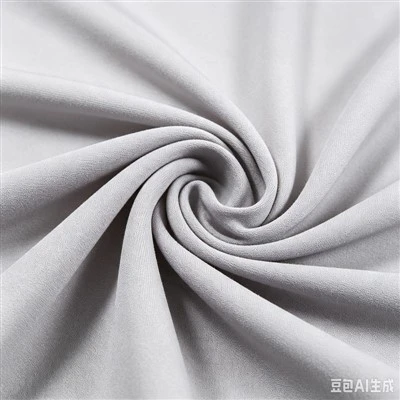
If you’re someone who’s in the market for nylon spandex fabric—whether you’re a brand launching a new line, a small business making custom clothes, or someone who needs bulk fabric for a project—we’re here to help. We have a wide range of blends, from 85/15 for everyday use to 75/25 for high compression, and we can test any batch to give you exact modulus numbers. No hidden fees, no complicated jargon, just honest answers about what works. Don’t hesitate to reach out to our team to chat through your needs, get samples, or ask any questions you have about modulus, fabric blends, or anything else. We’re here to make sure you get the right fabric for your project, every time.
Polyester Suede Fabric References:
- Textile Institute. (2019). Performance Testing of Stretch Fabrics: Modulus, Elongation, and Recovery. Journal of Textile Science and Engineering, 9(2), 45-52.
- ASTM D5035-19. (2019). Standard Test Method for Breaking Force and Elongation of Textile Fabrics (Constant Rate of Extension). American Society for Testing and Materials.
- Patel, R., & Suresh, K. (2021). Nylon-Spandex Blends: Effect of Blend Ratio on Mechanical Properties for Activewear Applications. International Journal of Fashion Technology and Textile Engineering, 15(1), 112-120.
- Swimwear Industries Association. (2020). Fabric Durability for Swimwear: Modulus and Chlorine Resistance. Annual Technical Report.
- Compression Fabrics Association. (2018). Design Parameters for Medical Compression Textiles: Modulus Requirements for Targeted Pressure. Clinical Textile Research Journal, 7(3), 78-85.
Shaoxing Haoman Textile Co., Ltd.
As one of the most professional nylon spandex fabric manufacturers and suppliers in China, we’re featured by quality products and good service. Welcome to wholesale custom made nylon spandex fabric at competitive price from our factory. If you have any enquiry about cooperation, please feel free to email us.
Address: Room422, Building19, Keqiao Cross-border E-commerce Industrial Park, Shaoxing City, Zhejiang Province
E-mail: 30473967@163.com
WebSite: https://www.haomantextile.com/
