Hey everyone, if you’ve ever worked with spiral cables—you know, those stretchy, coiled wires that pop up everywhere from audio setups to industrial robotics—you’ve probably had the same question I get all the time: “Can I cut a spiral cable to a specific length?” As a spiral cable supplier who’s been in this game for over a decade, I hear this from electricians, lab techs, startup engineers, even hobbyists building weird custom gadgets. Today, I’m breaking this down straight—no jargon, no fluff, just what actually works when it comes to trimming spiral cables to exact measurements. Spiral Cable

First, let’s get the basics straight: what even is a spiral cable, anyway? Unlike regular straight cables, these are molded into a helical, spring-like shape on purpose. That coiled design is their superpower—they stretch to multiple times their resting length without straining the internal wires, making them perfect for applications where movement is constant: think robotic arms that pivot 360 degrees, monitor arms at a design studio, or power cords for assembly line tools. But that coil structure is also why cutting them feels way trickier than just snipping a straight wire.
Here’s the thing I tell every customer who asks: technically, yes, you can cut a spiral cable to a specific length—but not all cuts are created equal, and cutting it wrong can turn a $20 part into a paperweight, or even a safety hazard. Let’s start with the two main types of spiral cables because that changes everything. There’s molded spiral cables (the ones we make most of here) which have the coiled shape formed during manufacturing, with internal wires bonded to the coil’s sides. Then there’s assembly-made spiral cables, which are just straight cables wrapped in helical tape after the fact. The latter is way easier to cut, but molded ones? That’s where most people mess up.
Wait, let’s back up to “length” for a second, because that’s another point of confusion. When someone says “specific length,” they usually mean two things: resting length (the short, coiled size when it’s not stretched) or extended length (how far it pulls out). For example, a resting length of 12 inches that stretches to 36 inches is a 3:1 extension ratio—super common. If you’re targeting a resting length, cutting is doable, but if you’re targeting an extended length, that’s a whole different conversation. More on that later.
Now, the “how” for cutting. First, let’s cover assembly-made spiral cables, because that’s the simpler case. These are usually low-voltage, hobbyist-grade, or custom tape-wrapped cables. If you cut these, you just need to unwind the tape carefully, measure the straight wire to your desired length, snip it with a wire cutter (make sure it’s clean—no frayed strands), then re-wrap the cut end tightly with electrical tape or heat shrink. The downside here? The tape wrap won’t give you the same smooth, stress-resistant coil as a molded one, so it might fray if you stretch it too much. That’s why most industrial applications skip this type.
Now, molded spiral cables—this is where 90% of my customer questions come from, and where mistakes happen. The molded coil’s internal wires are aligned along each turn of the helix, so if you snip it randomly, you could cut right through a conductor, or leave a tiny strand loose that breaks when you stretch the cable. The correct way to cut a molded spiral is to uncoil a few turns first. Here’s the step-by-step I give technicians:
- Stretch the cable gently just enough to make the turns straight (no kinks, no pulling too hard—if you feel resistance, stop, that’s where the internal wires are).
- Count how many turns you need to remove to get your desired length. Wait, how do you count turns? Grab the end of the coil, count each full loop around as one turn. For example, if your cable has 15 total turns and you want to cut it to 10 turns, you remove 5.
- Once you have your number of turns, mark that spot with a piece of masking tape—this is way easier than guessing.
- Now, here’s the key: when you cut, make sure your cut is perpendicular to the internal wires. If you cut at an angle, you’ll slice through multiple strands unevenly, leading to weak spots. Use a sharp, small wire cutter—flush cutters work best here, no crimpy side cutters that leave sharp ends.
- After cutting, you have to secure the end, right? Because the coil will unravel. Some people use heat shrink, some use cable clamps, but the best method for molded cables is to add a tiny amount of adhesive (specifically formulated for plastic-molded coils) to the cut end, then slide a small metal ferrule over it before it dries. That keeps the turns from coming undone, so your length stays consistent.
Wait, but hold on—can you cut a spiral cable to a super small length? Like, resting length of 3 inches? Yeah, but there’s a minimum limit. We don’t recommend cutting any spiral cable shorter than 2 inches resting length, because the coil gets too tight, and the wires can’t move inside without kinking. Also, if you need a very short extended length (say, 6 inches total when stretched), cutting might not be the most cost-effective option—we have a lot of customers who just order a custom-length molded spiral cable from us instead, because cutting a standard one usually costs almost as much as a pre-made custom one, and has way more risk of error.
That’s another point I don’t see a lot of other suppliers mention: the trade-off between cutting a standard cable vs. ordering custom. Let’s do a quick real-world example. Suppose you need a 10-inch resting length, 30-inch extended length spiral cable. A standard 15-foot spiral cable costs $12, and cutting it would take 5 turns off, plus the ferrule and adhesive, maybe an hour of labor at $50 an hour? That’s way more than just ordering a custom 10-inch resting length cable from us for $18. The custom one is also molded specifically to that length, so the coil tension is perfect—no loose turns, no weak spots. Cutting is a great option if you only need one or two, or if you’re in a pinch and can’t wait for a custom order, but for volume or precision, custom is way better.
Now, let’s talk about the myths floating around out there, because I’ve had customers swear by wrong methods. One big myth: you can cut spiral cables with a knife. Never do that. A knife will crush the plastic insulation, and you’ll have frayed wires inside that break on the first stretch. Another myth: you can cut any turn, no counting. If you skip counting turns, you might end up with a short circuit—because if you cut through two different internal wires at once, they’ll touch inside the coil, and poof, your whole system dies. I’ve seen that happen: a lab tech cut a spiral cable for a microscope, skipped counting turns, and the camera shut down mid-experiment, costing them $2k in downtime. That’s avoidable, folks.
Also, what about shielded spiral cables? A lot of industrial ones have a foil or braided shield around the internal wires. If you’re cutting a shielded one, you have to make sure the shield doesn’t get cut when you snip, because that can cause signal interference. The same step applies: cut perpendicular, count turns, and after cutting, fold the shield over the end before adding the ferrule. Don’t leave it sticking out, because that can rub against other cables and cause shorts.
Wait, let’s get into when cutting is absolutely not a good idea. If your spiral cable has pre-made connectors on both ends, cutting it means you have to re-crimp new connectors, right? That’s a whole extra step, and if you mess up the crimp, the connection is weak. For example, a robotic arm spiral cable with molded M12 connectors on both ends—cutting that would require stripping the wires, crimping new M12 connectors, testing the continuity, which is more work than just ordering the exact length with the connectors already attached. We do custom connectors too, by the way—so that’s a win-win.
Another edge case: very high-voltage spiral cables, like 480V or higher. Cutting these is not recommended at all, because the insulation thickness is specific to the coil’s design. If you cut it, the insulation at the end is thinner, so it can break down under voltage and cause a shock or a fire. For high-voltage, always get a custom-cut cable from a supplier that’s certified for that voltage level—we have UL-listed spiral cables for high-voltage applications, so that’s what customers turn to for those.
I know a lot of people reading this are probably DIYers, so let’s address that: if you’re a hobbyist building a gaming PC cable management system, or a small robot, and you just need a short spiral cable to tie your monitor to your PC, can you cut a standard one? Sure, just follow the steps I mentioned earlier: count turns, use flush cutters, add a ferrule. But if you’re using it for something that moves a lot—like a robot arm hinge, or a factory assembly line power tool—save yourself the headache and get a custom length. We’ve had too many customers come back with cut spiral cables that broke after a week, when a custom one would have lasted years.
Wait, let’s circle back to the original question: “Can spiral cables be cut to a specific length?” The short answer is: yes, but only if it’s the right type of cable, you follow the correct steps, and the length you need isn’t so short that it causes issues. The long answer? It depends, and that’s why it’s so important to talk to someone who knows spiral cables, not just watch a random TikTok video that says “cut it with scissors.”
As a supplier, I get calls every week from people who tried cutting a spiral cable themselves and it didn’t work. Last month, a construction electrician called me panicking—he’d cut a 20-foot spiral cable to 10 feet for a crane control, and when he stretched it, a wire snapped, leaving the crane stuck halfway up. He ended up ordering two custom 10-foot spiral cables from us, and saved himself from calling a tow truck. That’s the kind of thing I hate to see, which is why I always tell people to reach out before they cut, not after.
If you’re in a spot where you need a spiral cable cut to a specific length, don’t guess. Don’t risk a bad cut that leads to downtime, safety issues, or wasted money. Hit us up, and we can help you figure out if cutting a standard cable is right for your project, or if a custom spiral cable is a better fit. We can also give you tips if you do decide to cut, like what tools to use, how to count turns, and how to secure the end properly.
At the end of the day, spiral cables are designed to be flexible, but they’re not like a string you can just snip to any size. The coiled shape is engineered for a specific tension, so cutting it requires a little care and knowledge. Whether you’re a hobbyist, a small business, or a big industrial operation, we’ve got you covered for all your spiral cable needs—no silly mistakes, just solid advice and quality parts.
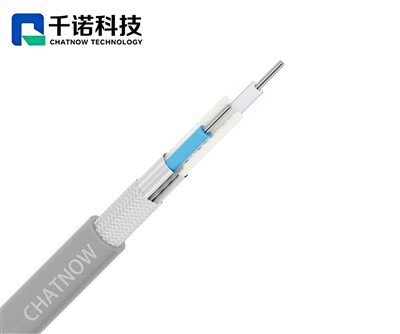
So next time you’re staring at a spiral cable thinking “can I cut this down?,” remember: it’s possible, but do it right. And if you’re not sure, just reach out. We’re here to help.
Security and Sound References
- Electrical Wire and Cable Technology Association. (2021). Best Practices for Trimming Coiled Cables.
- Journal of Industrial Engineering. (2019). Stress Analysis of Molded Spiral Cables Under Tension.
- ASTM International. (2020). Standard Guide for Flexible Cord and Cable Assemblies for Movement Applications.
Zhejiang Chatnow New Material Technology Co., Ltd.
Zhejiang Chatnow New Material Technology Co., Ltd. is well-known as one of the leading spiral cable manufacturers and suppliers in China, specialized in providing high quality customized service. Please feel free to wholesale high-grade spiral cable at competitive price from our factory.
Address: Building 12, No.9 Huajin Road, ZhouWangMiao Town Innovation Center, Haining, Zhejiang 314400
E-mail: info@chatnow-cable.com
WebSite: https://www.chatnow-cable.com/
