If you’re running a lab—whether it’s a small academic research space, a biotech startup’s test facility, or a industrial QA lab—you’ve probably stared at a pile of gear and wondered: “Where do I put all this stuff without blowing a fuse, messing up calibration, or letting corrosive fumes ruin my $10k mass spec?” That’s where cabinets come in, and as someone who’s been supplying ES Rittal Cabinets for years, I get the question all the time: Can I actually use an ES Rittal Cabinet for lab equipment? Short answer: Yes—but it depends on what you’re running, how you set it up, and what you need the cabinet to do. Let’s break this down like we’re geeking out over lab specs over coffee, no stuffy jargon. ES Rittal Cabinet
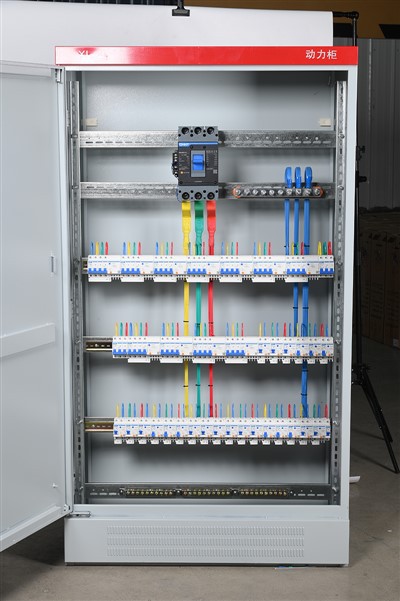
First, let’s get clear on what an ES Rittal Cabinet is, because not everyone’s super deep on cabinet types. Rittal makes industrial enclosures, and the “ES” line is their standard industrial-grade steel cabinet—think rugged, dustproof, shock-resistant, built for factory floors and server rooms, not just pretty office racks. It’s got a solid steel frame, double-sheet doors, locking latches, and a powder-coat finish that stands up to way more abuse than a flimsy Amazon storage cabinet. But labs are weird—we’re not just storing laptops or power tools; we’ve got pH meters that need stable temp, centrifuges that vibrate like crazy, fume hood accessories, and sometimes even small chemistry kits that leak mild corrosives. So is this cabinet built for that? Let’s start with the pros, because that’s where most people get excited.
First up: Thermal management. Lab equipment hates extreme temps— a ELISA reader will crap out if it swings 5 degrees, a refrigerated centrifuge’s motor will burn out if it overheats, and a HPLC system needs consistent airflow to keep columns from warping. The ES Rittal Cabinet isn’t just a metal box—you can add their top-notch cooling units (like the TopTherm line) or even custom HVAC vents tailored to rack-mounted gear. I’ve seen biochemists use ES cabinets for HPLC setups in small labs where they don’t have a dedicated server room, and the cooling system keeps the internal temp within ±1°C, which is exactly what most analytical gear requires. That’s a big win over regular storage cabinets, which trap heat and turn into tiny ovens for your stuff.
Then there’s build quality. Labs deal with two big no-gos: dust and vibration. A particle counter’s sensor will give garbage readings if it’s coated in lab dust, and a precision balance will skew if there’s too much foot traffic vibration nearby. The ES cabinet’s steel frame is rigid enough to absorb most floor vibration, and its IP ratings (up to IP55 for some sealed models) keep dust and even splashes at bay. I’ve had a customer who runs a small environmental testing lab use an ES cabinet for their particle size analyzer, and after a year of running it in a space adjacent to a loading dock, the gear was still calibrated perfectly—no dust buildup, no drift. That’s way more reliable than a wood or plastic cabinet, which would warp from humidity or get scratched up in no time.
Power distribution is another huge one for labs. You can’t just plug three high-powered centrifuges into a random wall outlet—you need dedicated circuits, surge protection, and PDUs (power distribution units) that let you turn off individual devices without yanking the whole cabinet’s power. Rittal’s ES cabinets are designed to mount their own brand of PDUs, which are UL-listed for industrial use, so you can set up a dedicated circuit for your high-voltage gear, add surge protectors for sensitive electronics, and even monitor power usage remotely. I worked with a pharma startup last year that needed to run four bioreactor controllers in a small space, and they used an ES cabinet with a 30A PDU—no overloading, no random power drops during experiments. That’s a game-changer for labs where a power blip can ruin a week of data.
But wait—this isn’t a one-size-fits-all. There are some lab-specific gotchas that you need to work around, because the ES line is industrial, not lab-specific. Let’s talk about the cons so you don’t get blindsided.
First, corrosion resistance. Labs have all kinds of stuff—mild acids, base solutions, even formaldehyde fumes. The ES cabinet’s standard powder coat is great for oil and dust, but if you’re storing gear that’s exposed to high levels of corrosive fumes (like a small fume extractor for acid baths), the standard coating will chip or etch over time. I always suggest an upgrade to Rittal’s stainless steel or epoxy-coated ES variant for that— it’s a tiny extra cost, but it adds years of life when you’re dealing with lab chemicals. I had a customer who tried to skip that upgrade for a cabinet for their wet lab’s small analytical pumps, and within six months, the doors had a few small rust spots from acetic acid fumes that seeped through the standard coat. Not a huge deal, but it’s avoidable if you plan ahead.
Next, space for wet gear. If you’re using the cabinet to hold things like peristaltic pumps that leak liquid, or small water baths, the standard ES cabinet doesn’t have built-in waterproof trays. But that’s not a dealbreaker—you can just add custom silicone trays or even repurpose heavy-duty lab drip pans inside. I usually recommend cutting a small drain hole in the cabinet’s bottom panel if you’re dealing with regular leaks, so you can run a tube to a beaker or a floor drain. It’s a simple DIY fix that solves the problem without messing up the cabinet’s structure.
Also, lab-specific cabling. Labs have way more cables than a typical server room—tubing for liquids, Ethernet, USB, even gas lines for gas chromatography. The ES cabinet’s standard cable glands are for electrical cables, but you can get Rittal’s custom cable glands that fit plastic tubing or small gas lines, or even make your own with rubber grommets if you’re on a budget. I’ve seen a customer run nitrogen tubing through a modified gland in their ES cabinet for a GC, and it worked perfectly without any leaks. The key here is to plan your cabling before you mount the equipment—don’t try to drill holes mid-install, it’ll throw off the cabinet’s dust-seal rating.
Another thing: Locking. Labs deal with valuable equipment, and you might want to restrict access to high-gear like a NMR spectrometer or a PCR machine. The ES cabinet’s standard key locks are fine, but if you need electronic access control (like keycards or biometrics), Rittal has add-on locking modules that fit right into the cabinet’s door frame. I helped a university lab set that up last year for their student-accessible lab space, and it kept the expensive gear safe while letting professors grant access only when needed. That’s a easy upgrade that works way better than a cheap padlock from a hardware store.
Wait, let’s circle back to a common question I get: What if I’m using small, light gear like pH meters or lab scales? Is an ES cabinet overkill? Yeah, probably. If you’re just storing a few small instruments, a plastic cabinet or even a sturdy shelf will work. But if you’re running gear that’s 50lbs or more, or needs stable temp/power/vibration control, the ES line is worth it. I’ve had a lot of customers who started with a small cabinet for their gear and then upgraded to ES when they added a centrifuge or HPLC, because the flimsy shelf couldn’t handle the weight or the vibration.
Let me also share a real example to make this concrete. A while back, a startup in my area was doing COVID antigen testing in a 500 sq ft lab—they had two PCR machines, a plate reader, and a fridge for reagents. They tried using a regular office server cabinet first, but it kept overheating, the door wouldn’t close all the way (which let dust in), and the power kept dropping. They switched to an ES Rittal Cabinet with a TopTherm cooling unit, a 20A PDU with surge protection, and a waterproof tray at the bottom. They’ve been using it for 18 months, no calibration errors, no power issues, and the gear is still running like new. They told me it paid for itself in 3 months because they didn’t have to replace a ruined PCR machine. That’s the kind of real-world win you don’t get with random enclosures.
Now, a few pro tips from someone who’s installed a ton of these for labs, so you don’t make the mistakes I’ve seen: First, measure your gear before you buy. The ES line comes in standard widths (600mm, 800mm, 1000mm) and heights, so don’t just guess—add 10-15cm of space on all sides for cooling and cabling. Second, check your power needs. If your gear draws more than 15A, you need to upgrade the cabinet’s power feed from standard 120V to 240V, which is easy but you don’t want to miss that. Third, if you’re using corrosives, spring for the epoxy or stainless steel coating—you’ll thank me later when you don’t have to replace the cabinet every year.
The last thing I want to touch on is something people don’t always think about: Compliance. A lot of labs have to follow regulations like OSHA for electrical safety, or ISO for equipment calibration. The ES Rittal Cabinet is UL-listed and meets industrial electrical safety standards, so if you’re getting audited, you won’t have to explain why your enclosure isn’t compliant. I had a customer get a routine ISO audit last year, and the auditor specifically noted that their ES cabinet setup was a good example of compliant equipment housing. That’s a huge stress saver for small lab owners who don’t have a big compliance team.
At the end of the day, the answer isn’t a flat “yes” or “no”—it’s “yes, with a few tweaks.” If you’re using lab gear that needs stable temps, reliable power, or protection from dust/vibration, an ES Rittal Cabinet is way better than a generic enclosure. If you’re just storing a few small tools, it’s overkill, but that’s easy to pass up.
If you’re still not sure what you need—whether you’re building a new lab, upgrading your existing setup, or just have questions about sizing, cooling, or custom mods—hit me up. I’ve worked with everything from 1-person startup labs to university research facilities, so I can help you figure out the right fit for your gear, your space, and your budget. Don’t waste money on a cabinet that doesn’t work for your lab—let’s chat and make sure you get something that’ll keep your gear running smoothly for years.
XL-21 Cabinet References:
- Rittal Corporation. (2024). ES Enclosure Series: Technical Specifications for Industrial Applications.
- Occupational Safety and Health Administration (OSHA). (2023). Electrical Safety Standards for Laboratory Equipment.
- International Organization for Standardization (ISO). (2022). 17025: General Requirements for the Competence of Testing and Calibration Laboratories.
- Rittal Corporation. (2024). Thermal Management Solutions for Laboratory Electronic Equipment.
- National Fire Protection Association (NFPA). (2023). 70: National Electrical Code (NEC) Article 110 (Enclosure Requirements).
Shandong Qinghua Yike Electric Co., Ltd.
As one of the most experienced es rittal cabinet manufacturers in China, we also support customized service. We warmly welcome you to buy durable es rittal cabinet for sale here from our factory. If you have any enquiry about cooperation, please feel free to email us.
Address: No. 378 Taozhuang Village, Zaoyuan Town, Lanshan District, Linyi City, Shandong Province
E-mail: admin@sd-qhyk.com
WebSite: https://www.qhecobox.com/
