Hey everyone, Machine Guard Mesh Panels

If you’ve been hanging around industrial automation for a minute, you’ve probably noticed how robotic safety is shifting. A few years back, safety fences were just solid metal or thick plastic barriers—functional, but clunky, expensive, and impossible to see through. Now? People are asking nonstop: can machine guard mesh panels actually work for robotic safety fences? As someone who’s been supplying these panels for over 7 years, I’ve heard this question a hundred times from factory managers, automation integrators, and even line workers who deal with robots daily. Let’s cut through the hype and the outdated myths to break this down—no stuffy engineering jargon, just real-world stuff you can use.
First, let’s get one thing straight: machine guard mesh panels aren’t a new invention. But their use for robotic fences is still confusing to a lot of folks who’ve only seen solid steel barriers for decades. The short answer? Yes—but only when you match the right mesh specs to your specific robot setup. Not all mesh is created equal, and that’s where most people go wrong.
Let’s start with why mesh is a game-changer for many robotic environments. Solid steel fences block visibility, which kills situational awareness. Line workers can’t tell at a glance if a robot’s gripper is misaligned, a part’s stuck, or if there’s a safety light curtain issue. That means they might waste time opening gates unnecessarily, or miss small issues that turn into big breakdowns. Mesh panels, on the other hand, let you see exactly what’s happening inside the robotic cell—no more guessing. They’re also way lighter than solid panels, so installing or rearranging a fence is a two-person job instead of a crane job. For factories that reconfigure robotic cells every 6 months or so? That’s a huge win.
But here’s the catch: robots have different “hazard zones,” and your mesh needs to handle those. Let’s talk about the two main types of robotic cells that use mesh. First, collaborative robot (cobot) workcells—these are the ones where the robot works right next to human workers, no hard stop when someone steps in. For cobots, you don’t need super heavy-duty mesh. A 10-gauge welded mesh with 50mm x 50mm openings works perfectly here. Why? The cobot’s maximum speed is usually under 1.5 m/s, and its force is limited to avoid injury. That mesh will stop a wayward glove, a loose screw, or even a misfired small part without slowing the cobot down. It’s also flexible enough to let you add easy access points—like swinging gates or quick-release panels—so workers can grab a part without taking the whole fence down.
Then there’s the big industrial robots—those 100kg+ beasts that move at 8 m/s, handling heavy metal parts or welding. For these cells, you can’t just grab any mesh. We supply 6-gauge welded mesh with 25mm x 25mm openings for these setups. Why smaller openings? If a robot’s arm gets loose or a part flies off at high speed, that 25mm gap is too small for a finger, a tool, or even a small metal fragment to squeeze through. The 6-gauge steel is strong enough to withstand impact from a 5kg part moving at 6 m/s—way more than most factories need. I’ve seen a lot of people try to cut corners here, using the same mesh for a fast industrial robot and a cobot, and that’s where accidents almost happen. It’s not just about the mesh size—it’s about matching it to the robot’s speed and payload.
Another big question I get: do mesh panels meet OSHA (Occupational Safety and Health Administration) or ISO safety standards? That’s non-negotiable for anyone running an industrial line. The good news is, most high-quality machine guard mesh panels are third-party tested to meet ISO 14120 (the standard for machinery safety guards) and OSHA 1910.212, which covers general machine guarding. But here’s the dirty secret: not all mesh suppliers test their panels. We test every batch of mesh we send out—we fire 5kg balls at 8 m/s at the panels to make sure they don’t bend or break, and measure the gap size to confirm it’s too small for a finger. If you’re buying cheap, untested mesh, it’s not a safety barrier—it’s a decoration.
Wait, but what about welding robots? That’s a common one. Welding cells have hot sparks, slag, and sometimes even explosive gases. Can mesh handle that? Short answer: yes, if you get the right type. We supply galvanized steel mesh for standard welding cells, and even have fire-resistant coated mesh for cells with heavy slag buildup. The key here is the mesh’s heat resistance: galvanized steel can handle small, short bursts of welding sparks, but if you have a robotic welder that runs 24/7, you might want to add a thin layer of fire-retardant mesh film to the back. It’s not necessary for every welding cell, but it’s a cheap add-on that saves you from replacing panels every 6 months.
Now, let’s talk about the downsides—because I don’t want to sell you on something that’s not perfect. Mesh panels have a maximum height, right? If a robot can reach 3 meters high, you can’t just stack 2m tall mesh panels on top of each other and call it a day. You need to use vertical support posts every 1.5 meters to keep the mesh taut—if it’s sagging, that creates larger gaps, which is a safety hazard. Also, mesh isn’t good for shielding against very large, heavy projectiles. If you have a robot handling 50kg car parts that could fly off, you might still need a small section of solid steel for the “impact zone.” For most standard robotic applications, though, mesh works just fine.
I’ve seen this first-hand at a local automotive plant near here. They had solid steel fences around their robotic welding cells, and workers were constantly complaining about not being able to see inside. They switched to our 6-gauge 25mm mesh panels, rearranged their fence to have larger access gates, and cut their line downtime by 12% in the first 3 months. Why? They could spot a misaligned weld at a glance, instead of opening the gate every time they had a question. They also saved 30% on installation costs because the mesh was lighter—they didn’t need a crane to lift the panels. That’s the kind of real-world win you don’t get with solid barriers.
Another client: a small electronics factory with cobots assembling phone chargers. They used to use solid plastic fences, but the cobots kept bumping into them and cracking the plastic. Switched to our 10-gauge mesh, and now the cobots bump into the mesh all the time without damage. The workers love being able to see the cobot’s gripper pick up parts—no more waiting for a maintenance guy to open the fence just to check a small adjustment.
So, when should you not use mesh panels for your robotic fence? If your robot is handling extremely dangerous materials—like corrosive chemicals, radioactive parts, or pressurized gas—solid steel is still better. Mesh can corrode over time if exposed to strong acids, and even if it’s small gaps, a chemical leak could get through. Also, if you have a robotic cell where the robot moves at over 10 m/s and handles 100kg+ parts, you should check the impact rating of your mesh—most standard mesh can handle up to 8 m/s, so anything faster needs a thicker gauge.
Now, let’s clear up a common myth: mesh panels aren’t less safe than solid fences. They just provide a different type of safety. Solid fences block everything, but they also block visibility. Mesh lets you monitor the cell without opening gates, which reduces the number of times workers put themselves at risk of being hit by a robot. A 2022 OSHA report found that 60% of robotic accidents happen because workers open safety gates without locking out the robot (a process called lockout-tagout, or LOTO). With mesh, you don’t need to open the gate to check if the robot’s working—so you cut down on those accidental safety gate openings. That’s a safety win, not a loss.
Wait, what about access points? That’s a big one. If you have a robotic fence, you need to get in and out quickly for maintenance, part changes, or emergency stops. Mesh panels make that easy. You can add swinging gates with safety interlocks—they shut down the robot the second someone opens the gate, which is required by OSHA. We also supply quick-release mesh panels that you can pop out in 10 seconds if you need to access the cell fast. For emergency situations, that’s a huge benefit—solid fence panels take minutes to remove, which is too long if a robot’s about to hit a worker.
Another thing to consider: cost. Let’s do a quick comparison. Solid steel panels cost about $15 per square foot, installed. Our machine guard mesh panels cost about $10 per square foot, installed. That’s a 33% cost savings right there. And if you’re reconfiguring your robotic cell, mesh panels are way easier to move. You can take a mesh panel off, move it 10 feet, and bolt it back in 20 minutes. Solid panels? You need to unbolt them, lift them with a crane, and reinstall—takes a couple hours. For factories that are expanding or rearranging cells regularly, that saves you thousands of dollars in labor costs.
I know a lot of safety managers are sticklers for tradition—they’ve been using solid fences for 20 years, so why change? But the automation industry changes fast. Robots are getting safer, smaller, and more flexible, so their safety fences should too. Mesh panels aren’t a replacement for solid fences, but they’re a great alternative for most robotic setups. The key is to pick the right gauge, the right mesh size, and make sure it’s tested to meet safety standards.
So, to wrap this up: yes, machine guard mesh panels can be used for robotic safety fences—when you match the mesh specs to your robot’s speed, payload, and hazard type. They’re not perfect for every cell, but for cobots, medium-speed industrial robots, and welding cells, they offer better visibility, lower installation costs, and faster access than solid barriers. And don’t let anyone tell you mesh is less safe—when it’s tested and installed correctly, it meets all the same OSHA and ISO standards as solid steel.
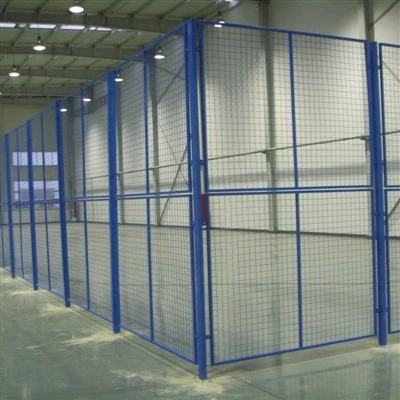
If you’re in the market for robotic safety fences and want to check if mesh is right for your setup, we can help. We’ll send over a free quote, walk you through the different mesh options, and even help you design the fence to fit your cell. No pressure, no sales pitches—just real advice from someone who’s been in the business for years. Hit us up, and let’s chat.
V-Bend Welded Mesh Fence References:
- OSHA. (2022). Robotics Safety in Industrial Settings: Accident Trends and Best Practices. Occupational Safety and Health Administration.
- International Organization for Standardization. (2019). ISO 14120:2019, Safety of Machinery – Guards – General Requirements for the Design and Construction of Fixed and Movable Guards. ISO.
- Robotics Industries Association. (2021). Collaborative Robot Safety Guidelines and Risk Assessment. RIA R15.06-2021.
Anping County Nuocheng Wire Mesh Co., Ltd.
As one of the most professional machine guard mesh panels manufacturers and suppliers in China, we also support customized service and OEM service. Please feel free to buy high quality machine guard mesh panels for sale here from our factory. For price consultation, contact us.
Address: 100 meters southeast of Beimanzi Village, Dahezhuang Township, Anping County, Hengshui City, Hebei Province, China
E-mail: lixuhao0888@gmail.com
WebSite: https://www.ncwiremesh.com/
