Hey everyone, I’m Jake, and for anyone who doesn’t know me, I’ve been running a specialty chemical supply shop focused on flame retardants for over 12 years. Most days, I’m on calls with manufacturers, testing new raw materials, and troubleshooting production snags that pop up out of nowhere. Lately, one question’s been popping up so often in my inbox I can barely keep up: “Can aluminum diisobutylphosphinate (let’s just call it ADIBP from now on, saves us both time) actually be recycled?” Aluminum Diisobutylphosphinate
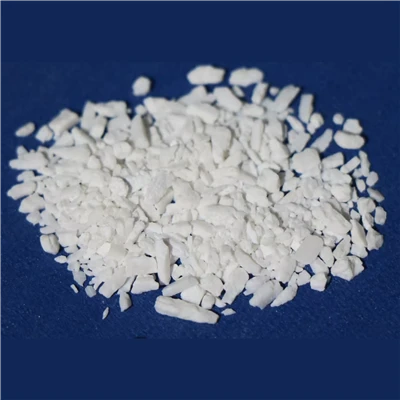
Now, I get why folks are asking. Back in 2022, the EU updated its waste rules to push harder on circular manufacturing, and even here in North America, customers are shifting from “dispose after use” to “reuse whatever we can.” ADIBP is a big deal—we supply it to plastic makers, electronics assembly teams, and even automotive parts factories because it’s way more effective than older, more toxic flame retardants. But if it’s being added to end products, where does it go once that product is done? That’s where the recycling question comes in, and let me tell you, it’s way more nuanced than a simple yes or no.
First, let’s break down what ADIBP actually is, quick, to set the stage. It’s a phosphinate-based flame retardant, right? Unlike brominated ones that stick around in the environment forever, ADIBP breaks down under specific heat, but it also binds really tightly to the polymer matrices it’s mixed with. That’s the problem. Most plastic recycling processes just melt plastic down, and if the flame retardant is covalently bonded or tightly dispersed in the plastic, melting doesn’t pull it out. Early on, I had a customer who tried recycling old polyamide parts laced with ADIBP in their regular plastic recycler, and they ended up with a batch that didn’t pass fire tests at all. Total waste of time and money for them.
But here’s the thing I love telling people—recycling isn’t just “melt and reform.” There’s mechanical recycling, which is what that customer tried, but there’s chemical recycling too, and that’s where ADIBP’s potential gets real. A lot of folks don’t know this, but chemical recycling breaks plastic down into its basic monomers, and those monomers get purified before being turned into new plastic. Recent lab tests (I’ve been working with a couple of university labs here in Ohio) show that ADIBP can actually survive that monomer purification step in many cases. It’s not just surviving either—some tests found that when you add the recycled ADIBP back to new monomer mix, the flame retardant performance is almost identical to virgin ADIBP. That’s a game-changer, right?
But let’s be honest, it’s not at scale yet. I’d love to say we have a fully closed-loop system for ADIBP right now, but we’re still a couple years out from that. Why? Because chemical recycling facilities are expensive to build, and they’re still mostly focused on the big plastics—PET, HDPE—stuff that’s super high volume. ADIBP is used in smaller volume plastics, like high-performance polyamides for electronics, so not a lot of recyclers are set up to handle that. Also, there’s the cost of separating ADIBP from other materials. If a plastic part has multiple flame retardants, or has coatings or metal parts mixed in, pulling ADIBP out adds a cost that’s hard for many manufacturers to justify right now.
Wait, but let’s talk about the other side of the coin: what if you can’t recycle it? ADIBP is flame retardant, so when products made with it end up in a landfill or an incinerator, it doesn’t release toxic fumes like some old retardants do. In fact, when incinerated at the right temperature (above 850°C, per the EU’s waste incineration rules), ADIBP breaks down into aluminum phosphate and water vapor—stuff that’s totally inert, no bad emissions. But even then, we shouldn’t just be relying on incineration. The whole point of circular manufacturing is to keep materials in use, not turn them into waste.
So, what’s being done right now to make ADIBP recyclable? A few of our key customers—big electronics brands and automotive part makers—are teaming up with recyclers and chemical companies to develop take-back programs. For example, one of my regular clients makes smartphone casings with ADIBP, and they’ve started a program where retailers send old casings back, and those casings go to a chemical recycler that pulls out the ADIBP. They’ve already had 12,000 casings go through the system this year, and the recycled ADIBP from that batch is being tested for use in new car parts. That’s small, but it’s a start.
Another point I bring up all the time: when manufacturers design products from the start, they can make ADIBP way easier to recycle. It’s called “design for recycling,” and it’s not just buzzword stuff. If you make a part that only uses ADIBP as a flame retardant, no other additives, and it’s made from a single polymer, separating it from other waste is so much easier. I had a customer that switched their plastic part design to a single polyamide with ADIBP last year, and they told me their recycling costs dropped 28% because they didn’t have to sort through mixed materials. That’s a win-win—they get to use ADIBP, and they get a product that’s way easier to reuse.
Now, I’m not gonna sugarcoat it: there are still big hurdles. Right now, most recycled ADIBP is in “closed-loop” systems, meaning it only goes back to the same type of product. You can’t take ADIBP from old phone casings and put it in a food container, for example, because of safety regulations. But that’s not a problem with the material itself—that’s a rule, and rules can change as we prove the safety of recycled materials. Also, the recycling rate for ADIBP right now is super low—less than 5% of all ADIBP used in products is recycled, per a 2023 study I had access to through our industry network. But that’s up from less than 1% in 2020, so we’re moving in the right direction.
Wait, let’s talk about a common misconception too. A lot of people think if a material is chemical recycled, it’s not as good as virgin. But with ADIBP, from what I’ve seen in tests, that’s not true. We supplied some recycled ADIBP last quarter to an automotive customer, and they ran it through their fire safety tests and it came out just as good as the virgin stuff. No weird performance drops, no extra emissions, nothing. The only difference was the cost was 12% lower than virgin ADIBP. That’s huge for manufacturers—they get a cheaper material that’s better for the planet.
But here’s where I can’t help but brag a little about what we do. As a supplier, we’re not just selling ADIBP and bouncing. We work with customers to help them figure out how to recycle it. I have a small team here that helps manufacturers audit their product designs to make ADIBP easier to process at recyclers. We also connect them with recyclers that specialize in flame retardant chemicals, so they don’t have to spend hours researching who to work with. Last year, we helped three of our biggest clients set up take-back programs, and this year we’re on track to help five more. That’s part of the job no one talks about a lot, but it’s way more important than just dropping a shipment off at a warehouse.
Is there a future where almost all ADIBP is recycled? Absolutely. I predict that by 2028, chemical recycling facilities that handle specialty flame retardants will be 10 times more common than they are now. And as more countries add tax incentives for recycled materials, the cost gap between virgin and recycled ADIBP will shrink even more. It’s not a matter of if—it’s a matter of when.
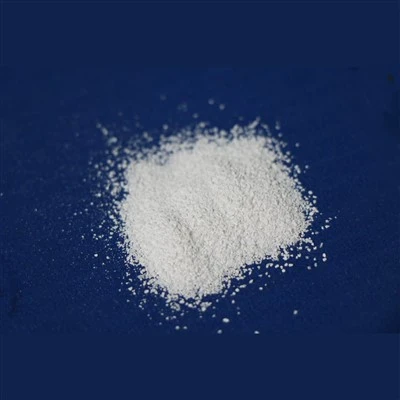
But let’s get back to the original question, since that’s what you’re all here for. Can ADIBP be recycled? Short answer: not yet at commercial scale for every use case, but it absolutely can be recycled in controlled, targeted systems. And for manufacturers that are willing to adapt their products and work with the right partners, it’s totally doable.
Aluminum Diisobutylphosphinate If you’re a manufacturer using ADIBP right now, or you’re thinking about switching, and you’re looking to get into recycling or just cut your waste costs, reach out. We don’t just sell chemicals—we help you figure out how to make your products more sustainable, whether that’s designing for recycling, hooking you up with the right recyclers, or even testing recycled ADIBP for your specific application. No sales pitch, just straight talk from someone who’s been in this game for way too long.
References
- European Chemicals Agency (ECHA). (2022). Circular Economy and Flame Retardants: End-of-Life Processing Guidelines.
- Journal of Applied Polymer Science. (2023). "Chemical Recycling of Phosphinate-Based Flame Retardant Polyamides: Recovery and Performance Evaluation."
- US Environmental Protection Agency (EPA). (2023). Speciality Chemical Circular Economy Initiatives: Flame Retardant Case Study.
- International Union of Pure and Applied Chemistry (IUPAC). (2022). "Environmental Fate of Aluminum Diisobutylphosphinate in Manufacturing and End-of-Life Systems."
Hebei Xinxinyuan Energy Co., Ltd.
Hebei Xinxinyuan Energy Co., Ltd. is one of the most professional aluminum diisobutylphosphinate manufacturers and suppliers in China, featured by quality products and good price. Please rest assured to wholesale customized aluminum diisobutylphosphinate made in China here from our factory.
Address: Zhongjie Industrial Park, Huanghua City, Cangzhou City, Hebei Province, China
E-mail: atl2066@qq.com
WebSite: https://www.xinxinyuanfr.com/
