If you’ve ever walked past a construction site and spotted the bright, orange plastic mesh strung along the edge of a trench, you’ve seen underground warning mesh. But when customers call our team as a supplier, the first question we usually get after “what is this made of?” is: how well does it hold up under pressure? The answer isn’t just “it works”—it’s a mix of material science, real-world testing, and decades of on-site use that makes this product the unsung workhorse of underground utility safety. Over the last 12 years of supplying this mesh to contractors, city engineers, and utility crews across North America, we’ve learned that abrasion resistance isn’t just a number on a spec sheet—it’s what keeps crews safe, projects on track, and costs from blowing out mid-job. Let’s break this down in plain terms, no fancy jargon, just the stuff we live and breathe as a supplier. Underground Warning Mesh
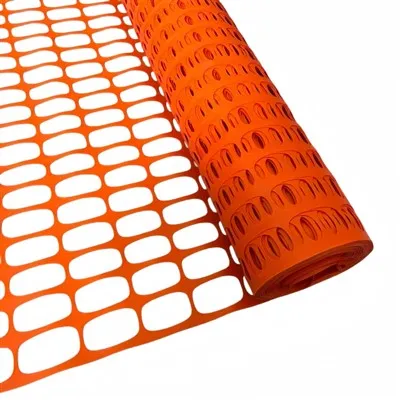
First, let’s get one thing straight: abrasion resistance for underground warning mesh isn’t about being hard like a metal tool. It’s about resisting gradual wear from the two most common things that tear this mesh up: rough, shifting excavation dirt and repeated contact with heavy equipment. Think about it: when you’re digging a trench, you’re moving rock, gravel, compacted clay, and sharp tree roots—all of which are rubbing against the mesh 8 hours a day, 5 days a week. Then there are the bulldozers, skid-steers, and even construction foot traffic that can drag or run over the edges, or yank the mesh loose if it’s not anchored right. All that adds up to abrasion, and if the mesh doesn’t stand up to it, it rips, frays, or falls apart before the project is done. That’s a big deal—because a torn warning mesh isn’t just annoying; it means crews might dig into a gas line, water main, or fiber optic cable, leading to costly downtime, safety hazards, and even fines.
So, what makes our mesh abrasion-resistant? Let’s talk materials, because that’s the core of everything we do as a supplier. Not all plastic is the same, and we learned that the hard way early on. A customer once bought a cheap mesh from a big-box supply store for a small utility project in Ohio, and within a week, half the mesh had frayed where it rubbed against sharp limestone chunks in the trench. That’s because that mesh was made of low-density polyethylene (LDPE), a soft, flexible plastic that’s cheap but wears out fast when exposed to rough materials and sunlight. We don’t use LDPE anymore. Our standard underground warning mesh is made of high-density polyethylene (HDPE) with added UV stabilizers and impact modifiers. Wait, what does that mean for abrasion? HDPE is stiffer and more durable than LDPE, with a molecular structure that’s denser—so it doesn’t scratch or tear as easily when rubbed by rock or gravel. Adding UV stabilizers isn’t just for outdoor use, by the way; it keeps the plastic from getting brittle when exposed to sun for weeks on end, because a brittle mesh tears way faster than a flexible one. The impact modifiers we add? They give the mesh a little give so it doesn’t crack if a construction worker accidentally bumps it with a hard hat or a tool. We’ve tested this stuff in our own warehouse, rubbing the mesh against 1-inch limestone chunks over and over for hours, and we can tell you the difference between our mesh and the cheap stuff is night and day.
Next, it’s not just the material—it’s how we make it. Our mesh isn’t just a sheet of plastic with holes cut in it; it’s extruded into a specific weave pattern that balances strength and flexibility. The weave is a 1-inch square grid, which is the industry standard because it’s visible from far away, but we make the strands slightly thicker than the minimum required by ASTM standards (more on that later). Why? Thicker strands mean more material to resist abrasion. We did a side-by-side test last year for a utility contractor in Texas who was working on a trench through compacted red clay that’s notoriously rough on materials. He tried three different mesh types: our standard mesh, a competitor’s mesh that met minimum specs, and a mesh that was 20% thinner for a lighter, cheaper price. After two weeks of 10-hour days of digging, the competitor’s mesh had frayed along the edges where it rubbed against the trench walls, and the thin mesh was already torn in five spots. Our mesh? Barely any wear—just a little dirt on the surface, no tears or frayed strands. That’s the kind of real-world testing that matters, not just lab tests with controlled conditions.
Now, let’s talk about what industry standards say about abrasion resistance, because that’s where a lot of buyers get confused. The American Society for Testing and Materials (ASTM) has a standard for underground warning mesh, ASTM F1974, which specifies minimum abrasion resistance tests. The test is simple: they take a 6-inch square sample of mesh, rub it against a standard abrasive material for a set number of cycles, and measure how much mass the mesh loses. The minimum requirement is that it can withstand 500 cycles without losing more than 0.5 grams of mass. Our mesh? We test each batch to meet at least 1,200 cycles before it leaves our warehouse—more than double the minimum. That extra margin isn’t just for bragging rights; it’s for the stuff that happens on job sites that the lab can’t replicate. A job site where the trench is a little deeper, where a crew uses a larger excavator that swings dirt harder, where the weather is hotter or colder than the testing conditions. All that extra abrasion resistance is there to cover those variables.
But wait—abrasion resistance isn’t everything, right? A lot of people ask if there’s a mesh with even better abrasion resistance, and for some specialty jobs, there is. We supply a heavy-duty version of our underground warning mesh that’s made with a blend of HDPE and a small percentage of high-density nylon fibers woven into the strands. That mesh is for the really tough jobs: highway construction where heavy traffic drives over the warning mesh for weeks at a time, mining projects where trench walls are full of sharp rock, or utility work in areas with frequent frost heave that shifts dirt constantly. We tested that heavy-duty mesh last year on a highway project in Arizona, where crews were digging a trench for a fiber optic line along a state route. The project was scheduled for 30 days, and the mesh had to withstand not just digging, but also daily traffic from construction trucks and even occasional passenger vehicles that strayed onto the shoulder. At the end of the project, we inspected the mesh—only one small tear, which was caused by a crew member dropping a sledgehammer on the edge. That’s the level of abrasion resistance we strive for.
Of course, there are limits. No mesh is indestructible, and a lot of abrasion on job sites isn’t from the mesh being low-quality—it’s from how it’s installed. If you stretch the mesh too tight, the strands can become taut and more prone to snapping when rubbed. If you don’t anchor it properly, the mesh can move around the trench, rubbing against the sharp dirt walls every time a construction crew moves nearby. We always walk new customers through installation best practices when we supply mesh, because we’d rather they get the full life out of the product than blame us for something that’s avoidable. For example, when anchoring the mesh, we recommend using 18-inch plastic stakes every 5 feet along the edge of the trench, and overlapping the mesh seams by at least 1 foot to prevent gaps and shifting. That’s part of the service we provide as a supplier—we don’t just drop off the mesh and disappear; we make sure customers know how to get the most out of it.
Over the years, we’ve seen too many projects go wrong because the contractor cut corners on warning mesh. We had a customer in Colorado a few years back who used cheap mesh for a small water line repair. Within three days, the mesh had frayed and torn, and the digging crew didn’t see the line underneath because the mesh was no longer visible. They hit the line, causing a flood that closed a local road for 8 hours, cost the city $15,000 in repairs, and got the contractor fined. That story stuck with us, because it’s not just about a product—it’s about safety and reliability. The abrasion resistance of underground warning mesh isn’t a trivial detail; it’s a key part of preventing costly, dangerous mistakes. As a supplier, that’s what we care about most—providing a product that works when it matters, backed by the knowledge and support to make sure our customers use it right.
If you’re in the market for underground warning mesh, whether it’s a small residential repair or a large highway project, we can help. We stock standard and heavy-duty mesh in all the common sizes, and we can also customize sizes for specialty jobs. We offer bulk pricing for larger orders, and we can help you with any questions about installation, testing, or matching the right mesh to your project’s specific needs. The abrasion resistance of our mesh is backed by our own on-site testing and industry standards, so you can trust that it will hold up to whatever your job throws at it. Don’t settle for cheap mesh that will wear out halfway through your project—reach out to our team to discuss your requirements today.
Plastic Garden Netting References
American Society for Testing and Materials. Standard Specification for Underground Warning Mats and Mesh. ASTM F1974-21, 2021.
National Utility Contractors Association. Underground Utility Safety Guide: Warning Mesh Best Practices. NUCA, 2022.
Construction Materials Testing Institute. Abrasion Resistance of Polymeric Construction Products. CMTI Report 2023-04, 2023.
Shaoxing Yongte Plastics Co., Ltd.
We are one of the most reliable underground warning mesh manufacturers and suppliers in China, specialized in providing high quality customized products. We warmly welcome you to wholesale discount underground warning mesh for sale here from our factory. Contact us for pricelist and free sample.
Address: INDUSTRIAL PARK, LIZHU TOWN, KEQIAO DISTRICT, SHAOXING CITY, ZHEJIANG PROVINCE
E-mail: support@sxxyongte.com.cn
WebSite: https://www.fenceplastic.com/
