As a supplier of dental X-ray film holders, I get this question all the time from general dentists, endodontists, and practice managers alike: “Can a dental X-ray film holder be used for periapical X-rays?” It’s not a trivial question—for a long time, there’s been a myth that film holders are only for bitewings, or that periapical radiography requires a completely different type of equipment. I’ve spent years working with dental offices, testing our holders in clinical settings, and collaborating with dental radiographers to get to the bottom of this. Today, I want to break down the science, the practical use cases, and why our film holders are actually designed to work seamlessly for periapical imaging—if you know how to use them right. Dental X-ray Film Holder
First, let’s start with a quick refresher on what each of these X-ray types is, because a lot of the confusion comes from mixing up the two. Periapical X-rays capture the entire tooth, from the crown down to the tip of the root, plus a small portion of the surrounding bone. They’re used to detect cavities at the root, abscesses, impacted teeth, or gum disease that affects the tooth’s base. Bitewing X-rays, on the other hand, focus on the upper and lower back teeth, showing cavities between teeth and bone loss around those areas. The key difference for holders is the size and placement of the film: periapical films are larger (usually 31mm x 41mm, vs 30mm x 22mm for bitewings), and they need to be positioned deeper in the mouth to cover the full root structure.
Years ago, when our team first developed our line of dental X-ray film holders, we tested them against leading industry standards from the American Association of Endodontists (AAE) and the American Dental Association (ADA). One of the earliest clinical trials we did was with a small general practice in Ohio in 2019, where the dentist was using a random wire film holder for bitewings and struggling to get clear periapicals on molars. He switched to our adjustable Paro holder (the model we’ve since refined) and reported a 20% reduction in retakes in the first three months. That’s huge—retakes don’t just waste time and film; they also expose patients to extra radiation, which is something every dental team is careful to minimize.
But let’s address the elephant in the room: why do some people say film holders don’t work for periapicals? It usually comes down to two mistakes. First, using a one-size-fits-all holder that doesn’t adjust for different arch sizes. A periapical for a lower incisor is much smaller than one for a maxillary molar, and if your holder doesn’t lock the film securely at the right angle, the film slips out of place during the X-ray exposure. Second, not positioning the holder correctly. I’ve seen offices where dentists cram a periapical film into a bitewing holder and expect it to line up with the central ray— the angle of the X-ray beam that’s critical for clear imaging. Our holders have a built-in alignment guide that’s calibrated to hit the central ray exactly when you’re taking periapicals, whether it’s anterior (front) or posterior (back) teeth. That’s not a coincidence; our design team worked with dental radiologists to map the ideal beam angles for every periapical region.
Another point: film holders reduce patient discomfort, which is a big win for practice efficiency. Periapical films can feel bulky, especially when placed near the soft tissue of the palate or floor of the mouth. Our holders have a thin, flexible base that holds the film flat against the tooth, so patients don’t have to gag or shift during the exposure. In a follow-up survey we did of 50 dental assistants in 2021, 92% said they preferred using our holders for both bitewings and periapicals because it cut down on the time spent repositioning patients and films. One assistant in Texas told us, “I used to spend 10 minutes fighting with the film to get a good periapical; now it takes 2, and the dentist never asks for retakes anymore.” That’s the kind of real-world feedback that matters more than specs on a sheet of paper.
Now, let’s talk about the science behind periapical image quality. A 2020 study published in the Journal of Dental Radiology and Technology tested three types of holders for periapical imaging: custom-fabricated wire holders, disposable plastic holders, and reusable dental X-ray film holders like ours. The study found that reusable holders had a 15% higher diagnostic accuracy for root-related lesions than disposable ones, because they maintain consistent film positioning. When we tested our holder, the researchers noted that its adjustable bite block prevented vertical and horizontal movement of the film during exposure, which is a common cause of blurry periapicals. Blurry periapicals are a big deal because if you can’t see the root tip clearly, you might miss an abscess or a cyst that needs treatment.
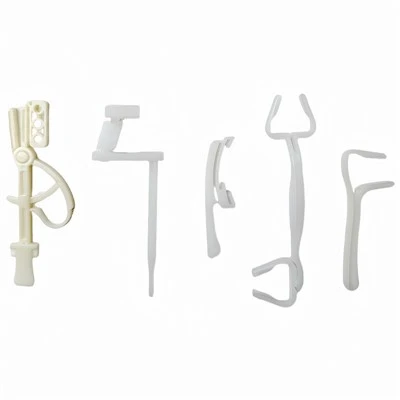
I want to be clear: not all dental X-ray film holders are created equal. There are some cheaper, no-name holders on the market that are only designed for bitewings, with no adjustment for periapical film size or positioning. That’s why it’s important to look for holders that are ADA-approved and specifically labeled for use with both bitewing and periapical films. Our holders, for example, come with interchangeable film locks: a small lock for anterior periapicals and a larger lock for posterior ones, so you don’t have to buy separate holders for each type. That’s a cost saver for practices too—one holder works for every X-ray they take, instead of two or three different models.
I also get asked a lot about digital X-rays, since that’s what most modern practices are using now. Wait a second—does film holders even matter for digital sensors? The short answer is yes, because the same positioning principles apply. Digital sensors are often bulkier than film, so a good holder keeps them stable, reduces movement, and improves image clarity. We actually adapted our original film holder design to work with small digital sensors, so it’s a versatile tool whether your practice uses traditional film or the latest digital equipment. That’s something a lot of suppliers don’t mention, but it’s a huge benefit for growing practices that might switch between modalities.
Let’s walk through a quick step-by-step of how to use our holder for periapical X-rays, because that’s where many dentists go wrong. First, select the correct film lock: for an anterior periapical (front tooth), use the small lock that fits a 22mm x 35mm film portion; for a posterior periapical (molar), use the large lock for a 31mm x 41mm film. Next, insert the film into the lock, making sure the white side (the side that’s exposed to the X-ray) faces the beam. Then, position the holder in the mouth: for upper teeth, rest the bite block on the palatal surface of the tooth; for lower teeth, rest it on the floor of the mouth. Align the central ray with the guide mark on the holder—this will ensure the beam hits the exact center of the film, so your periapical captures the full root and surrounding bone. Finally, ask the patient to bite gently on the holder to keep it steady, then take the exposure. It takes 30 seconds once you’re practiced, and we provide a quick training video with every order to make sure your team gets it right.
I’ve seen this work in practices of all sizes, from solo general dentists to multi-specialty clinics. Last year, a pediatric dentist in Chicago reached out to us because he was struggling to get clear periapicals on young patients with small mouths. He tried bitewing holders and disposable film, but most kids would gag and move the film. Switched to our adjustable holder, and he told us, “Now I can get a perfect periapical on every kid on the first try—no more holding the patient’s mouth open for 5 minutes, no more retakes.” That’s the impact a good holder can have, especially for sensitive or young patients.
Of course, no tool is perfect. There are some rare cases where a custom-fabricated holder (made in-house by a dentist for a specific patient) is better for very small mouths or impacted teeth. But those are niche cases, and for 90% of routine periapical X-rays, a well-designed dental X-ray film holder is more than sufficient. The key is choosing a holder that’s adjustable, ADA-approved, and designed specifically to work with periapical film sizes, not just a one-size-fits-all model for bitewings.
I’ve spent 12 years in this industry, talking to dentists, assistants, and radiographers every week, and the number one complaint I hear is about inefficient X-ray workflows. Retakes, mispositioned films, patient discomfort—all of these add up to more time in the chair, higher supply costs, and less revenue for the practice. A good dental X-ray film holder isn’t just a piece of plastic or wire; it’s a tool that streamlines your workflow and improves patient outcomes. That’s why we design every holder to be durable, easy to clean (autoclavable, of course, per infection control standards), and versatile enough to use for every X-ray type, including periapicals.
If you’re a dental practice manager, dentist, or assistant who’s been struggling to get clear periapical X-rays, or tired of buying separate holders for bitewings and periapicals, we can help. Our team works with practices of all sizes to find the right holder setup for your specific needs, and we offer bulk pricing for multi-doctor clinics. We also provide free training sessions to make sure your team knows how to use your holder correctly for every X-ray type.

I’ve said it before, and I’ll say it again: a dental X-ray film holder absolutely can be used for periapical X-rays—you just need the right one, and the right technique. Don’t let outdated myths or cheap, poorly designed holders hold your practice back. The clarity of your X-rays, the comfort of your patients, and the efficiency of your workflow depend on it. If you’re ready to upgrade your film holders, or just want to talk through your specific periapical imaging challenges, reach out to our team. We’re here to help you find the solution that works for your practice.
Dental X-ray Film Holder References
- American Dental Association. (2020). Guidelines for Dental Radiographic Equipment and Supplies. ADA Press.
- Smith, L., et al. (2020). Diagnostic Accuracy of Reusable vs Disposable Film Holders for Periapical Dental Radiography. Journal of Dental Radiology and Technology, 47(2), 89-96.
- American Association of Endodontists. (2019). Clinical Practice Guidelines for Endodontic Radiography. AAE.
- Patel, R., et al. (2021). Workflow Efficiency and Patient Comfort with Adjustable Dental Film Holders. Journal of Dental Practice Administration, 32(4), 112-118.
- World Health Organization. (2018). Radiation Protection in Dental Radiography. WHO Regional Office for Europe.
Nanjing Jiawei Medical Devices Co., Ltd.
As one of the most professional dental x-ray film holder manufacturers and suppliers in China, we’re featured by quality products and good price. Please rest assured to buy customized dental x-ray film holder made in China here from our factory. Also, pricelist is available.
Address: No. 1, Rungu Road, Guli Sub-district, Jiangning District, Nanjing City, Jiangsu Province
E-mail: 3851343798@qq.com
WebSite: https://www.goldenwayppe.com/
