Hey there! I’m one of the suppliers of Spiral Wound Membranes. You might be scratching your head and wondering, “What the heck is the rejection rate of a Spiral Wound Membrane?” Well, let me break it down for you. Spiral Wound Membrane
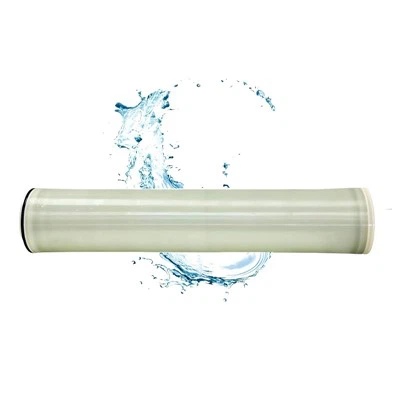
First off, what’s a Spiral Wound Membrane anyway? It’s a super – important component in water treatment and filtration systems. Imagine it like a multi – layer sandwich. There’s a semi – permeable membrane that does the heavy – lifting of separating different substances. It’s wound in a spiral shape around a central tube. This design allows for a large surface area in a relatively small space, which is just awesome for efficient filtration.
Now, let’s talk about the rejection rate. The rejection rate is basically a measure of how well the membrane can block certain substances from passing through while letting others go. It’s usually expressed as a percentage. For example, if a membrane has a 95% rejection rate for a particular solute, that means 95% of that solute is stopped by the membrane, and only 5% makes it through.
So, why does the rejection rate matter so much? Well, in industries where water purity is crucial, like pharmaceuticals or electronics manufacturing, even a small amount of impurities can cause big problems. A high rejection rate means cleaner water, which in turn leads to better – quality products and fewer production issues.
There are several factors that can affect the rejection rate of a Spiral Wound Membrane. One of the most significant ones is the membrane material. Different materials have different chemical and physical properties, which can influence how well they interact with various substances. For instance, some membranes are made from polymers that are more hydrophobic (water – repelling). These types of membranes are great at rejecting organic compounds that are non – polar. On the other hand, if you’re dealing with charged particles like ions, a membrane with a specific surface charge can have a higher rejection rate.
Another key factor is the operating conditions. Pressure plays a huge role. Typically, higher pressure can increase the rejection rate up to a certain point. When you apply more pressure, it forces more water through the membrane, and the solutes have a harder time squeezing through the tiny pores. But if you crank up the pressure too much, it can actually damage the membrane and lower the rejection rate over time.
Temperature is also in the mix. As the temperature goes up, the viscosity of water decreases. This can make it easier for solutes to pass through the membrane, potentially reducing the rejection rate. So, it’s important to keep the operating temperature within a suitable range.
The concentration of the feed solution is yet another factor. If you have a really high – concentration feed, there are more solutes trying to get through the membrane. This can overwhelm the membrane and cause the rejection rate to drop. It’s like trying to fit a whole bunch of people through a narrow door at the same time – it just doesn’t work very well.
Now, what kind of rejection rates can you expect from Spiral Wound Membranes? Well, it varies depending on what you’re trying to reject. For common salts like sodium chloride, a good – quality Spiral Wound Membrane can have a rejection rate of around 98% or even higher under optimal conditions. When it comes to larger organic molecules, the rejection rate can be even better, often above 99%.
But here’s the thing: these are ideal numbers. In real – world applications, there are always going to be some deviations. Maybe the water quality isn’t as consistent as you’d like, or the operating conditions aren’t perfect. That’s why it’s so important to work with a reliable supplier who can help you choose the right membrane for your specific needs and provide support to maintain a high rejection rate.
As a Spiral Wound Membrane supplier, I’ve seen firsthand how important it is to get the rejection rate right. I’ve worked with all sorts of customers, from small – scale water treatment plants to large industrial facilities. And let me tell you, every situation is unique. Some customers are mainly concerned with removing heavy metals, while others need to get rid of bacteria and viruses.
That’s where our expertise comes in. We have a wide range of Spiral Wound Membranes with different rejection rates and properties. Whether you need a membrane that’s super – efficient at rejecting salts, one that’s great for organic compound removal, or something in between, we’ve got you covered.
We also offer technical support to help you optimize your system. We can assist with things like choosing the right operating pressure and temperature, and we can even help you troubleshoot if you notice a drop in the rejection rate. Our goal is to make sure that you get the best performance out of your Spiral Wound Membrane, and that you’re happy with the results.
If you’re in the market for a Spiral Wound Membrane, don’t just go for the cheapest option or the one with the highest – sounding rejection rate on paper. It’s important to consider all the factors that can affect the performance and work with a supplier who can guide you through the process.

So, if you’re interested in learning more about our Spiral Wound Membranes and how they can meet your specific filtration needs, don’t hesitate to reach out. We’re here to answer your questions, provide samples, and have a chat about how we can work together to get you the best rejection rate possible for your application. Let’s have a conversation and see how we can make your water treatment or filtration system more efficient and effective.
Pure Water System References:
- "Membrane Technology and Applications" by Richard W. Baker
- Various industry reports on water treatment and membrane technology
Hangzhou Nanoimp Environmental Technology Co., Ltd.
With abundant experience, we are one of the most professional spiral wound membrane manufacturers and suppliers in China. Welcome to wholesale high quality spiral wound membrane in stock here and get pricelist from our factory. We also accept customized orders.
Address: Road 25, Baiyang Street, Qiantang District, Hangzhou City, Zhejiang Province
E-mail: keith.wang@nano-sepmer.com
WebSite: https://www.nanoimp-membrane.com/
