If you’ve ever stepped into a geotechnical lab, mining operation, or engineering test facility, you’ve probably seen the same scene: a technician hunched over a rock compression tester, scribbling numbers onto a crumpled notebook, waiting for the machine to stop applying force before they can record the peak load. Ten years ago, that was the standard for rock testing. Today, if you walk into that same space, you’ll find lab managers leaning over a laptop, watching real-time stress curves shift as a granite sample cracks, and exporting test reports without lifting a pen. The question I get most often from new clients—especially small mining teams and university research labs—is straightforward: Is it possible to connect rock testing equipment to a computer? The short answer is yes, and it’s one of the most impactful upgrades we’ve brought to the rock testing industry in the last decade. As a supplier of rock testing equipment, I’ve worked with labs across North America, Australia, and parts of Europe to install these systems, troubleshoot connections, and train teams to use them, so I can walk you through how it works, what it changes, and why this isn’t just a fancy “add-on”—it’s a core part of modern reliable rock testing. Rock Testing Equipment
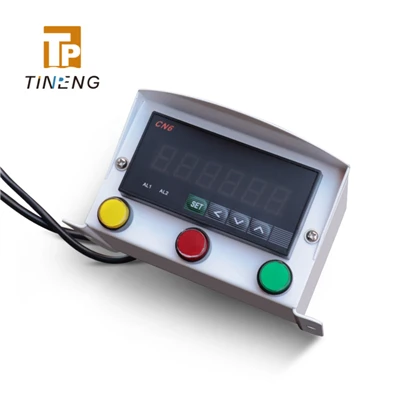
First, let’s break down the two core parts of this connection: the rock testing equipment itself, and the hardware/software that bridges it to a computer. Rock testing machines, whether they’re uniaxial compression testers, triaxial shear rigs, or point load testers, all have built-in sensors designed to measure force, displacement, and sometimes strain deep in the rock sample. Ten years ago, those sensors only output data to a small, basic display attached to the machine—you could read numbers, but you couldn’t save them, and you definitely couldn’t track every millisecond of a test. Now, nearly all modern rock testing equipment includes a data acquisition (DAQ) module, a compact box that acts like a translator between the machine’s sensors and a computer. This module converts the raw analog signals (the tiny electrical pulses that mean “10 kN of force applied” or “0.1 mm of sample displacement”) into digital data that a computer can process. The DAQ module connects to a computer via a standard USB cable in most cases, or sometimes via Ethernet for larger, industrial-scale rigs that need longer cable runs. That’s the basic setup, but there’s way more to it than just plugging a cord into two devices.
The biggest advantage of this connection is real-time data capture, which changes how rock testing is done. Let’s take an example: a triaxial compression test, which is used to measure a rock’s strength under different pressure conditions, a test that’s common for tunneling and dam construction. A few years ago, running this test meant a technician would check the machine’s display every 10 seconds, write down the force and confining pressure, and hope they caught the exact moment the sample failed. If they missed that peak—say, because they were writing something down and the rock cracked 2 seconds later—they’d have to repeat the entire test, which takes 2 to 6 hours for most rock samples, plus the time to prep the sample in the first place. Now, with a computer connected to the tester, the DAQ module captures data every 10 to 100 milliseconds, so you get a perfect, continuous curve of stress vs. strain, with no gaps. If the sample fails, the software flags that exact peak immediately, and you can see exactly how the rock behaved before, during, and after failure. For labs running 10 to 20 of these tests a week, that cuts down on repeat tests by 30% or more, according to data from geotechnical lab standards like ASTM D7012, which outlines procedures for rock compressive strength testing.
Another common use case I see is for mining operations that need fast, consistent rock testing to plan mine designs. Many mining sites have portable rock testing units that they use in the field, not just in a fixed lab. Connecting a portable point load tester or a small compression rig to a laptop means miners don’t have to haul heavy data loggers back to an office—they can run tests at the mine face, save data directly to their laptop, and review results within an hour instead of 24 hours. I had a conversation last year with a small gold mining team in Western Australia that was spending half their weekly testing budget on driving 4 hours each way to a regional lab to get their rock data analyzed. We installed a compact portable testing rig, connected it to their foreman’s work laptop, and they now run tests on site, adjust their mine wall support plans within days instead of weeks, and have cut their testing costs by 40% in the last 18 months. That’s not just a small improvement—that’s a change that directly impacts project timelines and budgets.
But it’s not just about capturing data faster; it’s about the software that comes with connected systems, which solves a lot of the human error that plagues manual rock testing. Manual data entry is prone to mistakes—transposing numbers, misreading a display, or writing down the wrong test result. When you connect a rock testing machine to a computer, all data is auto-saved, so there’s no chance of losing a number or entering it incorrectly. The software also lets you customize test parameters: set the speed at which force is applied, set a failure threshold, and automatically generate a test report that includes the sample ID, test date, rock type, and all numerical results. You can even integrate these systems with other lab software, like LIMS (Laboratory Information Management Systems), which lets you share results with engineers or project managers without emailing or faxing documents back and forth. For a large engineering firm running hundreds of rock tests a year, this integration reduces administrative work by hours a week, and makes data much more organized and searchable.
That said, I should be clear: connecting rock testing equipment to a computer isn’t a one-size-fits-all setup, and there are a few key things to consider if you’re thinking about making the switch. First, not all rock testing equipment is compatible. Older machines, built before 2010, often don’t have the DAQ module built in, so you’ll need to either retrofit the machine with a DAQ unit or replace the machine entirely if it’s too old or outdated. We offer retrofitting for many older models, which is often more cost-effective than buying a new machine, but it’s important to work with a supplier who knows both your specific machine model and the software you want to use. Second, data security is a consideration, especially for companies working on government or industrial projects that require secure data storage. Most connected systems offer encrypted data transfer, so test results are only accessible to authorized users, but it’s something to ask about before you buy. Third, training is key. I’ve seen plenty of labs buy connected systems and then barely use them because the technicians didn’t know how to set up the software or interpret the new data. That’s why as a supplier, we include full training with every connected system—we don’t just drop off a machine and a cord; we work with your team to show them how to run tests, troubleshoot small issues, and use the software to get the results they need.
I should also address a common concern I hear: some lab technicians worry that connecting equipment to a computer will make the testing less accurate, or that the software will “adjust” results unfairly. That’s simply not true when the system is set up correctly. The DAQ module and associated software follow the exact same industry standards as manual testing—ASTM, ISRM (International Society for Rock Mechanics), and Australian Standards all have specific guidelines for how data should be captured and reported, and good connected systems are calibrated to match manual test results within 1% error, which is well within acceptable limits for most projects. In fact, because there’s no human entry error, connected systems often produce more consistent results than manual testing. I’ve tested this with our own equipment: we ran 20 identical granite samples, half with manual data entry and half with connected computer capture. The connected system results varied by less than 2%, while the manual results varied by up to 7%. That’s a huge difference for projects that rely on precise rock strength data, like high-speed rail lines or dam construction.
Over the last 5 years, demand for connected rock testing equipment has grown steadily, and it’s not just from big companies. Even small university research labs and independent geotechnical consultants are asking for these systems because they reduce time and cost, and make it easier to publish accurate results. I worked with a civil engineering research lab at a university in Canada last year that was studying how different types of shale rock break under pressure. Before they had a connected system, they spent 3 months manually recording and analyzing data for their study; with the connected system, they finished the analysis in 6 weeks, and their results were published in a leading engineering journal without needing to re-test any samples due to data errors. That’s the kind of impact that makes connecting rock testing equipment to a computer worth the investment.
If you’re currently relying on manual rock testing, or if you’ve had issues with lost data, repeat tests, or slow result turnaround, the good news is that the transition is simpler and more affordable than ever. You don’t have to replace your entire lab to make it work—we can retrofit most existing machines, or offer compact, portable connected systems for field work, all with the training and support you need to get started. The key is to work with a supplier that understands both the technical side of rock testing and the needs of your team, whether you’re a small mining operation or a large engineering firm.

If you’re ready to upgrade your rock testing setup and see how connecting your equipment to a computer can save time, reduce errors, and improve the reliability of your test results, reach out to discuss your specific needs. We can walk you through different system options, answer any questions about compatibility or calibration, and help you find a solution that fits your budget and workflow.
Building Lime and Mud Testing Apparatus References
ASTM D7012-19, Standard Test Methods for Compressive Strength and Moduli of Rock Core Specimens, ASTM International, West Conshohocken, PA, 2019.
International Society for Rock Mechanics (ISRM), Suggested Methods for Determining the Uniaxial Compressive Strength of Rock, 2007.
Australian Standard AS 1289.6.5.1:2009, Methods of Testing Soils for Engineering Purposes—Part 6.5.1: Strength Tests—Determination of Unconfined Compressive Strength, Standards Australia, Sydney, 2009.
Zhuozhou Tianpeng Imp. and Exp. Trade Co., Ltd.
Zhuozhou Tianpeng Imp. and Exp. Trade Co., Ltd. is one of the most professional rock testing equipment manufacturers and suppliers in China, featured by quality products and good price. Please rest assured to buy advanced rock testing equipment made in China here from our factory. Customized orders are welcome.
Address: Building C28, Hegu Technology Industrial Park, Development Zone, Zhuozhou, Hebei, China
E-mail: zhangdajing@testmould.com
WebSite: https://www.testmould.net/
