Hey everyone, Sarah here, and I’ve been running that anti-static raised floor supply business for like 7 years now. I talk to data center managers, server room techs, office facility heads every single day, and one question that comes up more times than I can count is: “Why does humidity even matter for these floors?” Like, I get it—you’re busy troubleshooting servers, dealing with HVAC quirks, and you don’t have time to overthink stuff like relative humidity when you’re fighting a last-minute power outage. But trust me, humidity and your anti-static raised floor? That combo is way more important than you think. I’ve seen so many folks brush this off, only to end up with static discharge issues that fried a rack of servers, or warped floor panels that cost them thousands in downtime. Let me break this down like I would when I’m on a call with a new client—no jargon, just real talk from someone who’s actually been in the field. Anti Static Raised Floor
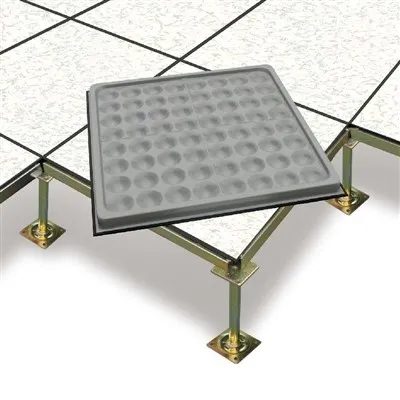
First, let’s get the basics straight for anyone who’s new here. Anti-static raised floors (we call them ASRFs in the biz, by the way) are those modular panels that sit 6 to 36 inches above a room’s concrete slab, right? They’re everywhere in data centers, server rooms, cleanrooms, even some high-end lab offices. The whole point of these floors is two-fold: one, they give you a flexible underfloor space for cables, power lines, and cooling ductwork, which is way easier than running cables all over the floor. Two, the anti-static part—they’re coated or made with materials that keep static electricity from building up. Static discharge, or ESD (electrostatic discharge, another acronym you’ll hear a lot), is that tiny zap you feel when you touch a doorknob after walking across carpet, but for servers and circuit boards? That zap is millions of times smaller, and it’s enough to permanently fry a $10,000 server chip in a heartbeat. So ASRFs are built to bleed that static off into the ground, keeping your gear safe.
Now, how does humidity tie into all this? Let’s start with static electricity 101, super simplified. Static builds up when electrons transfer between two different surfaces—like your shoes and carpet, or your office chair’s wheels and the floor. Those electrons hang around on a surface until they can jump to a place with a different charge, which is what causes that zap. Water molecules in the air are actually really good at carrying electrons. When humidity is high, those water molecules stick to every surface—your skin, your clothes, the floor panels, even your server’s metal chassis. That means any excess static charge on the floor or on your gear can easily transfer through those water molecules into the air, and eventually to a grounded point, so it never builds up enough to cause damage.
But here’s the thing: it’s not just high humidity that’s a problem. Low humidity? That’s when things go sideways fast. I had a client last winter—small data center for a healthcare startup in Minnesota—who turned their heat up super high to fight the -20°F outside, and forgot to check their humidifier. Within two weeks, their ASRF panels started acting like static magnets. Their techs started seeing random ESD errors on their servers, and even some cracked circuit boards. When they called me panicking, the first thing I had them check was their room’s humidity levels—they were at 12% relative humidity, which is way below the recommended range. That’s way too dry.
Wait, let’s get specific on the sweet spot here. Most manufacturers—including the ones I work with—recommend keeping ASRF rooms at 30% to 60% relative humidity (RH). I know that range seems broad, but it’s non-negotiable. Let me explain why the extremes on either end are bad.
First, low humidity (below 30% RH, like that Minnesota client had). When the air is dry, there’s barely any water molecules floating around to carry excess charge. So static has nowhere to go. It builds up on every surface—your floor panels, your shoes, your server racks, even your body. That’s why techs wearing rubber-soled shoes (which are super common in server rooms) are a huge risk here—rubber doesn’t conduct charge at all, so when you walk across a low-humidity ASRF, you’re building up a static charge on your body that can be 10,000 volts or more. When you reach for a server handle, that zap jumps, and boom—ESD damage. I’ve also seen low humidity warp ASRF panels? Wait, how does that happen? A lot of mid-tier ASRF panels are made with composite wood cores, covered with a conductive steel or vinyl top. When it’s super dry, the composite wood shrinks a little bit, and the top coating doesn’t flex with it. So you get tiny gaps between panels, or even panels that warp upward, which messes up the floor’s load capacity. That’s a whole other problem—not just ESD, but a trip hazard or even a point where you can’t roll a server rack properly.
Now, high humidity (above 60% RH). A lot of people think high humidity is fine because it conducts static, and yeah, that part is true—but too much of a good thing is bad. Let’s talk about corrosion first. ASRF panels have metal parts: the bottom support frame, the conductive layer, the brackets that hold the panels in place. When the air is damp, that metal starts to rust over time. Rust is an insulator, right? So if your panel’s conductive layer is covered in rust, it can’t bleed static off anymore. That defeats the whole purpose of the anti-static design. I had another client in Florida, coastal area, their server room was in a basement that never got dehumidified. After a year, their ASRF panels had so much rust on the edges that ESD errors started popping up, and they had to replace half the floor panels. Cost them way more than a good dehumidifier would have. Also, high humidity can mess with the underfloor cabling, which is a huge part of why you have ASRFs in the first place. Cables coated in plastic or PVC can absorb moisture, which reduces their insulation rating. That means more risk of short circuits, too. And if you have a raised floor that’s used for cooling (like cold aisle containment, which is super popular now), high humidity can cause condensation on the cold air ducts inside the underfloor space. That condensation drips onto cables, or even the floor panels, leading to water damage.
Wait, but here’s a common myth I hear all the time: “My ASRF is grounded, so humidity doesn’t matter.” No, that’s not how it works. Grounding is part of the equation, but it’s only effective if the charge can move from the floor to the ground. If the air is too dry, the charge can’t get from the server to the floor to begin with. The ground is a big bucket for charge, but you need a path to get there. Humidity is a critical part of that path. I had a guy tell me last year that his ASRF was grounded perfectly, and he still had ESD issues. I asked him for his RH reading, and it was 18%. Even a good ground can’t fix that, because there’s no medium to carry the charge between the device and the floor. So that myth? Total bust.
Another thing I’ve noticed over the years: different types of ASRFs react differently to humidity. Like, solid core vinyl ASRFs—those are the ones I recommend for most standard server rooms—are pretty resistant to humidity changes, as long as it’s not extreme. But if you get the cheaper composite core panels (the ones some suppliers cut corners on to charge less), those are way more sensitive. The composite wood swells when it’s too humid, shrinks when it’s too dry, so you get panel gaps or warping a lot faster. That’s one of the reasons I only work with suppliers who use high-density, moisture-resistant composite cores—because even small humidity changes won’t mess those up. And the conductive top coating? We use a static-dissipative coating that stays consistent across RH levels, so you don’t have to worry about it breaking down when humidity is high.
Let me also talk about real-world fixes, since this isn’t just a problem to diagnose—you need to fix it. First, test your humidity levels regularly. I tell all my clients to get a digital hygrometer for every server room, not just one in the corner. Underfloor spaces can have different humidity than the room above, because hot air rises, and cool air from the underfloor can condense. So stick a hygrometer down there too, and check it every day during extreme weather—winter in cold climates, summer in humid ones. Second, get a humidity control system. It doesn’t have to be fancy for most small to mid-sized rooms. A whole-room humidifier if you’re in a dry climate, or a dehumidifier if you’re in a wet one. For larger data centers, there are HVAC systems built specifically to maintain 30-60% RH, which is worth the investment because downtime costs way more than the equipment. Third, inspect your ASRF panels regularly. Look for rust on the edges, gaps between panels, warped spots. If you see those, check your humidity levels first—more often than not, that’s the root cause. And if you have old panels that are corroded, replace them before they cause ESD damage.
Wait, let’s circle back to that Minnesota client I mentioned earlier. They were about to rip out half their ASRF floor because they thought it was faulty, until we checked the humidity. We had them install a small humidifier, and within a week, their RH was at 42%, static errors stopped, and the slight warping on a few panels went away on its own. They saved thousands in replacement costs just by fixing the humidity. That’s the kind of thing I love—issues that seem like they’re a big expensive fix, but are actually just a $200 humidifier away from being solved.
Another common scenario: office spaces that use ASRFs for open work areas, not just data centers. I worked with a startup that had an open office with ASRFs for cable management, and they kept getting complaints about static shocks when employees touched desks or monitors. Turns out, their office was in a dry, high-rise building in Chicago, with forced air heating that sucked all the moisture out. Their RH was at 22%. We suggested adding small humidifiers near the seating areas, and within a month, employee complaints dropped to zero. No need to replace the whole floor, just fix the humidity.
So let’s wrap this up, no fancy stuff. Humidity isn’t just a random HVAC metric—it’s a critical part of keeping your anti-static raised floor working like it’s supposed to. Too dry, and you get static build-up that damages your gear and warps panels. Too wet, and you get corrosion and water damage that ruins your floor’s conductive properties. Stick to that 30-60% relative humidity range, test it regularly, and you’ll avoid 90% of the ASRF issues I hear about every week.

If you’re dealing with ESD errors, warped panels, or just want to make sure your ASRF is set up right for your humidity levels, I’m here to help. I’ve been in this long enough to know one size doesn’t fit all—whether you’re a small office or a big data center, I can walk you through what you need, no pushy sales talk, just real advice from someone who’s seen it all. Reach out to chat about your requirements, and we can figure out the best solution for your space.
Raised Flooring Systems References
- American National Standards Institute. (2018). Standard for Electrostatic Discharge Control Areas for the Protection of Electrical and Electronic Parts, Assemblies and Equipment.
- Floor Council International. (2021). Raised Access Floor Design and Maintenance Best Practices.
- Electrostatic Discharge Association. (2020). Humidity Guidelines for ESD-Protected Workspaces.
Fineco Tech Co., Ltd.
As one of the most professional anti static raised floor manufacturers and suppliers in China, we’re featured by quality products and good service. Welcome to wholesale customized anti static raised floor made in China here from our factory. If you have any enquiry about cooperation, please feel free to email us.
Address: Wuyue Square, Wujin District, Changzhou, Jiangsu, China
E-mail: info@finecotech.com
WebSite: https://www.finecoglobal.com/
