When I first started sourcing and supplying Monascus Yellow a decade ago, I thought it was just another natural food colorant—an alternative to synthetic yellows that food manufacturers were begging for. But over the years, I’ve learned that producing consistent, high-quality Monascus Yellow isn’t as simple as fermenting rice with a mold and harvesting the pigments. Every batch I bring in comes with a host of technological hurdles that have nothing to do with growing Monascus purpureus or Monascus ruber, and everything to do with controlling every tiny variable in the process so the final product meets the strict standards food brands need. Let me walk you through the biggest challenges we face as a supplier, because if I don’t understand them, I can’t deliver a product my customers can rely on. Monascus Yellow
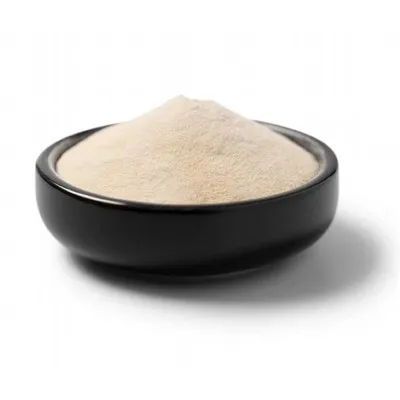
First off, there’s the problem of controlling pigment profiles and purity. Monascus Yellow isn’t a single compound—it’s a mix of two main pigments, monascin and ankaflavin, plus trace related metabolites. Different strains of Monascus produce different ratios of these pigments, and some also make byproducts like citrinin, a mycotoxin that’s toxic to humans. Early on, I worked with a small fermentation lab that sent me a batch testing at 120 parts per billion of citrinin—way over the 50 ppb limit the FDA and EFSA set for food use. Fixing that meant switching from uncharacterized wild strains to genetically stable, low-citrinin mutants, but even then, the pigment ratio can shift unexpectedly. If a customer needs a bright, clear yellow for a lemon-flavored soda, they want a high monascin-to-ankaflavin ratio, but if they’re coloring a baked good that needs a slightly warmer, golden yellow, they need more ankaflavin. Getting that ratio consistent batch after batch is tricky because the ratio changes with fermentation temperature, pH, oxygen levels, and the type of rice we use. For example, japonica rice has higher starch content than indica rice, and when we use japonica, monascin levels jump by 15%, but if we hold the fermentation temperature 2°C too high, ankaflavin drops by 20% and citrinin starts creeping up. That kind of precision isn’t easy to hit at scale, and it’s one of the first technological challenges any Monascus Yellow producer has to solve.
Next, there’s scalability and yield. Fermenting Monascus at lab scale is straightforward—you can grow a liter of culture in a shaker flask, tweak conditions until you get perfect pigments, and harvest easily. But when you scale that to 10,000-liter fermenters, all those small variables become big problems. Oxygen transfer is a huge one. In a small flask, oxygen is evenly distributed throughout the broth, but in a giant industrial fermenter, the bottom of the tank can be starved for oxygen while the top is saturated. Monascus is an aerobic mold, so if it doesn’t get enough oxygen, it shifts its metabolism away from pigment production and starts growing more mycelium, which doesn’t contribute to color. We’ve had to invest in custom aeration systems and impeller designs that keep oxygen levels consistent across the entire fermenter, but even with that, yield swings are common. Lab scale might give a pigment yield of 800 mg per kg of dry rice, but at production scale, we’re often hovering around 550 mg per kg, and if we mess up aeration or pH, that drops to 300 mg per kg. That’s a huge hit to profitability, and it means we have to work with our customers to price accordingly without cutting corners on quality. Another part of scalability is downstream processing. Once fermentation is done, we have to extract the pigments from the rice, separate the mycelium, and concentrate the pigments into a powder or liquid that’s easy for food manufacturers to use. If the extraction solvent is too harsh, it breaks down the pigments; if it’s too mild, we only get half the color out. We tried using ethanol at different concentrations, but we found that 70% ethanol works best, but we have to filter the extract multiple times to remove residual rice starch, which can make the final product cloudy. If we skip a filter step, the pigment powder will leave sediment in a customer’s beverage, which is a dealbreaker. Scaling that filtration process without losing pigment during transfer has been a years-long project for our team, and it’s still something we tweak every time we move to a new production facility.
Then there’s stability and bioavailability. Food manufacturers don’t want a color that fades when their product sits on a shelf. Monascus Yellow pigments are sensitive to light, heat, and pH, which is a big problem. For example, in a pH 3 beverage, Monascus Yellow stays stable for 6 months, but in a pH 7 sauce, it starts fading after 2 months when exposed to light. Heat is even worse: when we use Monascus Yellow in a baking mix that’s baked at 180°C, 30% of the pigment breaks down during the process. We’ve tested encapsulation as a solution—wrapping the pigment molecules in a layer of starch or gum arabic to protect them. That works, but encapsulation adds cost, and if we encapsulate too thick, the pigment doesn’t dissolve properly in water, which means it can’t mix into clear products like soda. Another challenge is bioavailability, but wait—actually, for some customers, that’s not a food safety issue, it’s a functional one. Some brands use Monascus Yellow for its purported health benefits (it’s been linked to reduced cholesterol), but if the pigment isn’t absorbed by the human body, those benefits don’t matter. We’ve found that the free pigments in our product are less bioavailable than bound pigments, so we’re experimenting with modifying the fermentation to keep the pigments bound to cell wall compounds, but so far, that reduces overall yield by 10%, which is a tradeoff we’re still negotiating with our customers.
Quality control and consistency are also massive technological challenges, especially when we’re dealing with natural products. Synthetic colorants have very precise chemical formulas, so every batch is identical, but natural pigments from fermentation vary by strain, growth conditions, harvest time, and processing. We run every test in-house—HPLC for pigment ratios, LC-MS for citrinin, and spectrophotometry for color intensity—but even with that, we’re always playing catch-up. A few years ago, a customer sent us a complaint that a batch of our Monascus Yellow had a greenish tint instead of the bright yellow they ordered. We traced it back to a strain of Monascus that had mutated during fermentation, producing a small amount of green pigment called monascorubin, which we’d never seen before. It turns out that even genetically stable strains can mutate after 5 generations of fermentation, so now we have to do genetic sequencing on every new strain we use, and we test each production batch for 18 different secondary metabolites, not just citrinin. That adds a lot of time and cost to our process, but it’s non-negotiable—our customers trust us to deliver a color that looks the same every time, no exceptions.
I’ve also had to deal with regulatory challenges, which tie directly to the technology of production. Different countries have different rules on Monascus Yellow: the US allows it in certain quantities, the EU banned it for a while due to citrinin concerns, and now only allows specific low-citrinin strains, and some Asian countries have very strict limits on residual solvents from extraction. Keeping up with those regulations means we have to adjust our production process every few years to meet new standards, and sometimes that requires investing in new equipment. For example, when the EU updated its citrinin limit in 2020, we had to install a continuous citrinin monitoring system in our fermenters, which cost us over $200,000. But it’s worth it, because if we can’t meet regulatory standards, we can’t supply our customers.
Through all these challenges, I’ve learned that there’s no one-size-fits-all solution for Monascus Yellow. Every customer has different needs: one wants a liquid pigment for beverages, another wants a dry powder for baked goods, another wants a high-chromatic pigment for candies. As a supplier, my job isn’t just to sell a product—it’s to solve these technological problems so my customers don’t have to. I spend a lot of time working with food technologists at my customer’s facilities, troubleshooting issues they’re having with the color’s stability or solubility, because if they succeed, we succeed.
If you’re a food manufacturer looking for a reliable Monascus Yellow supplier, or you have questions about how we overcome these technological hurdles, I’d love to hear from you. We’ve invested years in refining our process to deliver consistent, high-quality Monascus Yellow, and we’re always open to collaborating on custom solutions for your product needs.
Monascus Red References
Patakova, P. (2013). Monascus pigments: production and applications. Applied Microbiology and Biotechnology, 97(10), 4235-4245.
EFSA. (2019). Safety of Monascus pigments (E 163a) as a food additive. EFSA Journal, 17(12), e05908.
Chen, Y., et al. (2021). Recent advances in the production and application of Monascus pigments. Journal of Agricultural and Food Chemistry, 69(32), 9045-9056.
Dufosse, L. (2015). Fungal pigments: from production to applications. Applied Microbiology and Biotechnology, 99(15), 6257-6271.
Fudijia (Tianjin) Supply Chain Co., Ltd.
With abundant experience, we re one of the most professional monascus yellow manufacturers and suppliers in China. We warmly welcome you to wholesale bulk high quality monascus yellow made in China here from our factory. For more information, contact us now.
Address: 301-2-1C,Jin Bin Jie Zuo,No.98, Huanghai Road,TEDA, Tianjin, China
E-mail: foodchem@hjlfoods.com
WebSite: https://www.ifoodchem.com/
