Customizing precision disc parts according to industry requirements is a complex yet rewarding process. As a supplier in the field of Precision Disc Parts Machining, I’ve had the privilege of working with various industries, each with its unique set of demands. In this blog, I’ll share some insights on how to navigate this process effectively. Precision Disc Parts Machining

Understanding the Industry Requirements
The first step in customizing precision disc parts is to have a comprehensive understanding of the industry requirements. Different industries have different needs, and these needs often dictate the design, material, and manufacturing process of the disc parts.
For example, in the aerospace industry, precision disc parts need to be lightweight yet strong enough to withstand high – stress environments. Materials like titanium and high – strength alloys are commonly used. The tolerances for these parts are extremely tight, often in the micrometer range. Any deviation from the specified dimensions can have serious consequences, such as affecting the performance and safety of an aircraft.
On the other hand, the automotive industry focuses on cost – effectiveness while maintaining high – quality standards. Mass production is a key factor here, so the manufacturing process needs to be scalable. For automotive engine components, such as disc brakes, materials like cast iron or carbon – ceramic composites may be used, depending on the specific application. Cost – saving measures are often implemented without compromising the performance and durability of the parts.
In the electronics industry, precision disc parts are often used in small, delicate devices. Miniaturization is a major trend, so the parts need to be extremely small and precise. Materials like silicon, copper, and various polymers are commonly used. The manufacturing process may involve techniques such as micro – machining and precision stamping.
To gain a better understanding of the industry requirements, it’s essential to communicate closely with the customers. We usually start with in – depth discussions to understand their product design, functionality requirements, performance expectations, and budget constraints. This helps us to identify the key factors that need to be considered during the customization process.
Material Selection
Once we have a clear understanding of the industry requirements, the next step is to select the appropriate material for the precision disc parts. The material selection plays a crucial role in determining the performance, durability, and cost of the parts.
There are several factors to consider when choosing a material. First, the mechanical properties of the material need to match the application requirements. For example, if the disc parts are used in a high – speed rotating environment, the material should have high strength and good fatigue resistance. If the parts are exposed to corrosive environments, corrosion – resistant materials like stainless steel or aluminum alloys should be used.
Second, the manufacturability of the material is also an important consideration. Some materials may be difficult to machine, which can increase the production cost and lead time. We need to ensure that the selected material can be easily processed using our available machining techniques.
Third, cost is always a factor. We need to balance the performance requirements with the cost of the material. Sometimes, a more expensive material may be necessary to meet the high – end performance requirements, but in other cases, a more cost – effective alternative can be found without sacrificing too much on performance.
For example, in the medical device industry, biocompatible materials are often required for precision disc parts used in implants. Titanium and certain polymers are commonly used because they are non – toxic and can integrate well with the human body. However, these materials can be relatively expensive. We work closely with our customers to find the right balance between biocompatibility and cost, sometimes by using innovative manufacturing techniques to reduce the amount of material used.
Design and Engineering
After material selection, the design and engineering of the precision disc parts come into play. This is where we translate the industry requirements into a detailed design that can be manufactured.
Computer – Aided Design (CAD) software is an essential tool in this process. We use CAD to create 3D models of the disc parts, which allows us to visualize the design and make necessary adjustments. We can simulate the performance of the parts under different conditions, such as stress analysis, thermal analysis, and fluid dynamics analysis. This helps us to optimize the design and ensure that the parts will meet the performance requirements.
In addition to CAD, Computer – Aided Manufacturing (CAM) software is used to generate the machining instructions for the manufacturing process. CAM software takes the 3D model from CAD and converts it into a set of commands that can be understood by the machining equipment. This ensures that the parts are manufactured with high precision and accuracy.
We also work closely with our customers during the design and engineering phase. We provide them with regular updates on the progress of the design, and we welcome their feedback and suggestions. This collaborative approach helps to ensure that the final design meets their expectations and requirements.
Manufacturing Process
The manufacturing process is the heart of customizing precision disc parts. There are several machining techniques available, and the choice of technique depends on the material, design, and quantity of the parts.
Milling is a common machining process used for precision disc parts. It involves using a rotating cutter to remove material from the workpiece. Milling can be used to create complex shapes and features on the disc parts, such as grooves, holes, and pockets. The accuracy of milling can be very high, especially when using advanced CNC (Computer Numerical Control) milling machines.
Turning is another widely used process. In turning, the workpiece rotates while a cutting tool moves along the surface to remove material. Turning is ideal for creating cylindrical or disc – shaped parts with a high degree of roundness and concentricity. CNC turning machines can achieve very tight tolerances and high – quality surface finishes.
Grinding is a finishing process that is used to achieve extremely high precision and smooth surface finishes. It involves using an abrasive wheel to remove a small amount of material from the workpiece. Grinding is often used for parts that require very tight dimensional tolerances, such as bearing surfaces.
In some cases, we may also use other manufacturing processes such as electro – discharge machining (EDM), which is suitable for machining hard materials and creating complex shapes that are difficult to achieve with traditional machining methods.
Throughout the manufacturing process, quality control is of utmost importance. We have a comprehensive quality control system in place to ensure that every precision disc part meets the specified requirements. We use various measurement tools and techniques, such as coordinate measuring machines (CMMs), to check the dimensions and surface finish of the parts at different stages of the manufacturing process.
Testing and Validation
Once the precision disc parts are manufactured, they need to be tested and validated to ensure that they meet the industry requirements. Testing can involve various methods depending on the application of the parts.
Mechanical testing is often used to evaluate the strength, hardness, and fatigue resistance of the parts. Tensile testing, compression testing, and hardness testing are some of the common mechanical testing methods. These tests help us to ensure that the parts can withstand the expected loads and stresses in their actual applications.
Functional testing is also crucial. This involves testing the parts in a simulated or real – world environment to verify their functionality. For example, if the disc parts are used in a pump, we will test the pump with the parts installed to ensure that it operates efficiently and reliably.
In addition to these tests, we also perform non – destructive testing (NDT) to detect any internal defects in the parts. NDT methods such as ultrasonic testing, X – ray testing, and magnetic particle testing can help us to identify cracks, voids, or other defects that may not be visible on the surface.
Conclusion
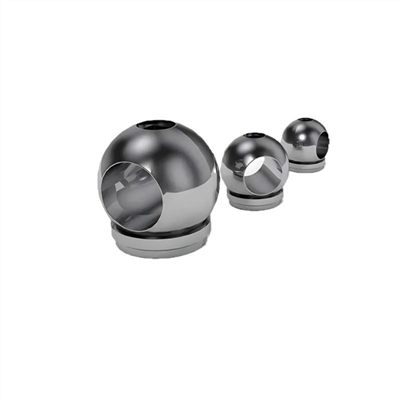
Customizing precision disc parts according to industry requirements is a multi – step process that requires a deep understanding of the industry needs, careful material selection, precise design and engineering, advanced manufacturing techniques, and rigorous testing and validation. As a Precision Disc Parts Machining supplier, we are committed to providing high – quality customized solutions to our customers.
Shaft Parts If you are in an industry that requires precision disc parts and are looking for a reliable supplier, we’d love to start a conversation. Whether you have a specific design in mind or need help with the entire customization process, our team of experts is ready to assist you. Contact us to discuss your requirements and explore how we can work together to achieve your goals.
References
- Kalpakjian, S., & Schmid, S. R. (2009). Manufacturing Engineering and Technology. Pearson Prentice Hall.
- Groover, M. P. (2010). Fundamentals of Modern Manufacturing: Materials, Processes, and Systems. Wiley.
Taizhou Liuhuan Machinery Co., Ltd.
As one of the most professional precision disc parts machining manufacturers and suppliers in China, we’re featured by quality products and good service. Please rest assured to buy customized precision disc parts machining made in China here from our factory. For quotation, contact us now.
Address: Xinyuan Industrial Zone, Damaiyu Street, Yuhuan City, Zhejiang Province,China
E-mail: tzlhmachining@gmail.com
WebSite: https://www.tzlhmachining.com/
